
In large-scale water conservancy projects such as dredging and desilting of Rivers and Lakes, maintenance and excavation of ports and waterways, and offshore reclamation, desilting engineering ships are "underwater spears" to overcome difficulties. These behemoths have extremely strict requirements for the wear resistance, compressive strength, and weather resistance of the conveying pipelines during the process of extracting the mixture of underwater silt, gravel, and crushed stone from the water. The large-diameter suction and discharge hose is precisely designed for this purpose - it combines the technology of "high wear-resistant outer rubber layer+composite reinforced skeleton" to become the "golden armor" for engineering ships to resist fluid impact and external wear, ensuring the efficiency and safety of dredging operations on vast water surfaces.
News
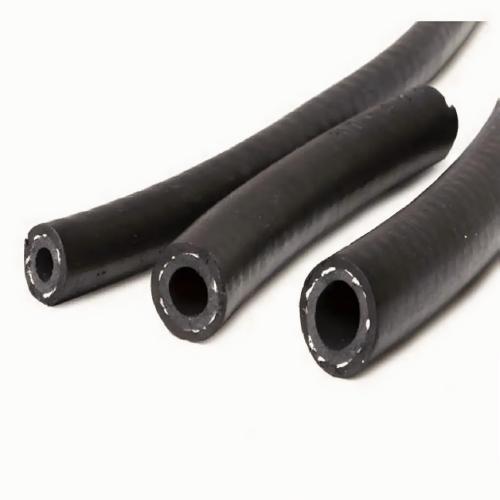
Large caliber suction and discharge hose with high wear resistance outer rubber used for dredging en
1、 Hard core armor with outer layer: a comprehensive upgrade from impact resistance to weather resistance
At the site of dredging engineering ships, hoses not only have to withstand high-speed erosion of internal sand and gravel, but also face multiple tests such as wave impact, hull friction, long-term outdoor exposure, and seawater erosion. In the past, the industry usually only focused on the wear resistance of the inner rubber layer, but in practical operations, the wear and weather resistance of the outer rubber layer directly determines the survival rate of the hose in harsh environments.
The modern high-performance large-diameter suction and discharge hose has achieved a qualitative leap in the design of the outer rubber. Different from traditional smooth rubber, the outer layer of the new generation product adopts a composite structure of high-strength synthetic rubber and polyurethane (PU) protective layer. This optimized outer adhesive not only continues the traditional characteristics of ozone resistance and UV resistance, but also significantly improves hardness and tear strength.
In order to cope with the scratching of underwater rocks and ship hulls, some high-end products have added high-strength stainless steel spiral steel wire as the external skeleton in the outer rubber. This layer of rigid and flexible protective design is like a lock armor, allowing the hose to not only withstand the positive and negative pressure suction of the mud inside, but also resist the external puncture of underwater sharp stones. Moreover, by covering the inner adhesive layer with alumina ceramic sheets, the hose has achieved a breakthrough of "zero wear" when transporting coarse gravel particles. After such a comprehensive upgrade, the service life of the hose has been extended by more than three times compared to traditional sludge discharge pipes, greatly reducing the frequency and maintenance costs of pipeline replacement for engineering ships at sea.
2、 Composite reinforced skeleton: the "mechanical magic" to conquer positive and negative pressure
The operating conditions of dredging engineering ships are extremely complex, and the hoses may face enormous pressure (i.e. positive pressure) from high flow pumping, and may also encounter strong vacuum suction (i.e. negative pressure) at the suction port. Ordinary conveyor belts cannot withstand such pulling and stretching, and are prone to tube collapse or bursting. The core mystery of large-diameter suction and discharge hose lies in its precise composite reinforcement structure.
The interior of the pipe wall of this hose is like a carefully constructed "reinforced concrete" structure. The reinforcement layer covers multiple layers of impregnated curtain fabric or high-strength polyester rope, formed by winding process, providing the basic tensile and blast strength for the pipe body. What truly sets it apart from ordinary rubber hoses is its built-in spiral metal wire skeleton layer.
This spiral steel wire has a very high elastic modulus. When the mud pump of the engineering ship is started at full speed and a huge vacuum suction force is generated inside the pipe, the spiral steel wire acts like the "spine" of the pipeline, providing strong radial support and effectively preventing the pipe wall from being "sucked flat" under atmospheric pressure. It is precisely this design of "softness with rigidity" that enables large-diameter hoses to have the dual characteristics of high pressure resistance (usually 4 times the working pressure) and high vacuum resistance (vacuum pressure up to 80Kpa), perfectly adapting to the complex requirements of dredging ships for both suction and discharge.
3、 Standardized interface and scene adaptation: the "lifeline" from a depth of 100 meters to a coastline of thousands of miles
Large dredging projects often have the characteristics of long construction periods and harsh construction environments. The efficiency and sealing of pipeline connections directly affect the progress and environmental compliance of the project. In response to this, large-diameter suction and discharge hoses generally adopt a steel flange connection design.
The advantages of flange connection are extremely prominent in marine operating environments. Compared to clamp type connections, flanges have higher neutrality, rigidity, and sealing stability, and can withstand the enormous axial tension generated during dredging processes. According to different usage scenarios, flange type rubber hoses are subdivided into various models, such as straight tube type used for ordinary connection ends, and flared type used at pipeline diameter changes. These flange interfaces have been precision machined and equipped with high-performance sealing gaskets, which can maintain "no leakage" under underwater pressure of tens or even hundreds of meters, effectively preventing secondary environmental pollution caused by mud leakage during dredging.
In terms of inner diameter coverage, the large-diameter suction and discharge hose exhibits strong adaptability. Whether it is suitable for conventional dredgers with a capacity of 200 cubic meters per hour (with an inner diameter of about 400mm), or for super large engineering ships like the "Beaver 4600" (with an inner diameter of over 700mm), or even for super large diameters of over 1 meter required for 13500 cubic meters of drag suction ships, this series of rubber hoses has mature size and reinforcement layer schemes. This customized design ensures that the hose not only has minimal wear when transporting high concentrations of sediment, coral sand, and even small-sized crushed stones, but also maintains extremely high transport efficiency. Its excellent technical indicators (such as inner layer adhesive tensile strength ≥ 15MPa, Akron abrasion ≤ 0.8cm ³) also provide a solid technical foundation for modern dredging projects to move towards "deep sea, far sea".
4、 Summary
In summary, the large-diameter suction and discharge hose, with its high wear and weather resistant outer rubber layer, steel cord composite reinforced skeleton, and standardized flange connection system, perfectly defines the "hardcore standard" of modern dredging equipment. It is no longer just a conveyor pipe, but an engineering system that integrates impact resistance, wear resistance, anti suction and quick connection. Whether in windy coastal ports or muddy inland lakes, the "golden armor" of this engineering ship silently withstands the erosion of millions of tons of mud, guarding the "lifeline" of water engineering with its long service life.