
Saturated steam is one of the commonly used heat media in fields such as chemical production, food processing, pharmaceutical industry, and hot pressing equipment. However, condensation water is inevitably generated during the transportation process of steam pipelines. If these high-temperature condensation water cannot be discharged in a timely manner, it will not only reduce the heat exchange efficiency, but also may cause the phenomenon of "water hammer", which will have a devastating impact on pipelines and equipment. The large-diameter steam rubber hose is a specialized product designed for this working condition - it uses EPDM temperature resistant lining to construct a heat aging barrier, multiple layers of woven/wrapped reinforcement layers to carry the working pressure, and the design concept of intermittent condensate drainage to ensure system safety, becoming a "flexible thermal bridge" in industrial thermal systems.
News
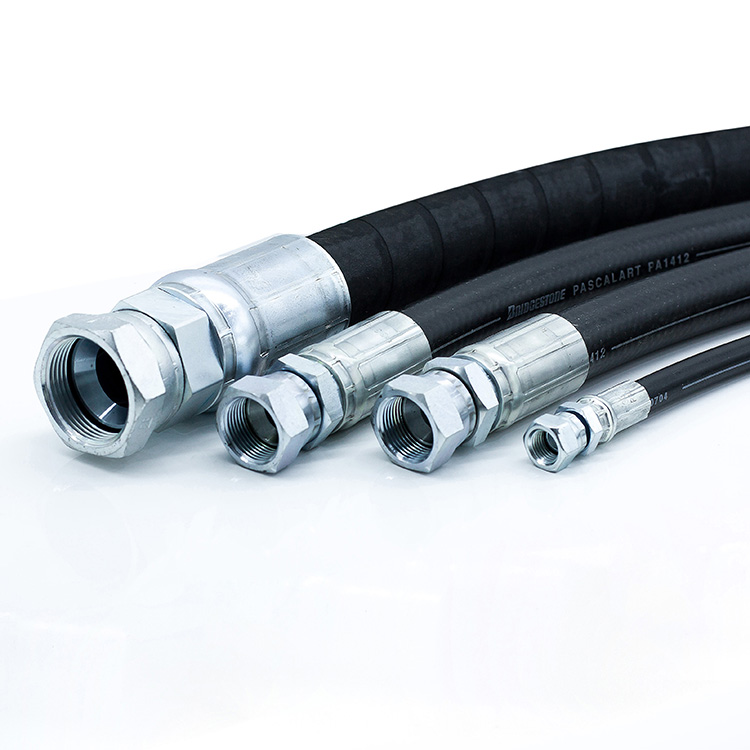
Large diameter steam rubber hose with high temperature resistance of 180 ℃ intermittent condensate d
1、 High temperature resistant password: Anti aging design of EPDM lining
Steam transportation imposes extremely strict thermal stability requirements on the adhesive layer inside the hose. At a high temperature of 180 ℃, the molecular chains of ordinary rubber will accelerate thermal oxidative aging, and hardening, cracking, and even carbonization failure can occur within a few weeks. Therefore, the high temperature resistance of the inner rubber layer is the primary factor determining the service life of large-diameter steam hoses.
The inner and outer rubber layers of modern high-performance steam hoses commonly use ethylene propylene diene monomer (EPDM) as the base material. The main chain of EPDM molecules is composed of saturated carbon carbon bonds, without double bonds that are easily attacked by heat and oxygen, giving it excellent high temperature resistance, ozone resistance, and chemical resistance. At a continuous operating temperature of 180 ℃, the physical property degradation rate of EPDM is much lower than that of ordinary rubber, and the volume expansion rate can be controlled within an extremely low range.
In response to the special properties of steam media, multiple optimizations have been made to the formulation design of EPDM liners. The addition of hydrolysis resistant stabilizers effectively inhibits the hydrolysis damage of rubber molecular chains by high-temperature steam; The peroxide sulfurization system replaces traditional sulfur sulfurization, greatly improving the thermal stability of cross-linking bonds; The uniform dispersion of nano reinforced fillers (such as high structure carbon black and white carbon black) enables the inner adhesive layer to maintain sufficient tensile strength and tear resistance at a high temperature of 180 ℃. Laboratory data shows that after working continuously in saturated steam at 180 ℃ for 200 hours, the tensile strength retention rate of high-quality EPDM inner rubber can still reach over 85%.
For scenarios with higher temperature requirements, some imported models can even withstand saturated steam or superheated water at 210 ℃. This level of heat resistance enables it to meet the flexible pipeline connection requirements of ultra-high temperature hot pressing equipment such as flat vulcanizing machines, steam hammers, and steam cleaners.
2、 Structural skeleton: mechanical logic of multi-layer reinforcement and intermittent condensate discharge
Large diameter steam hoses not only need to withstand high temperatures, but also must withstand the internal pressure of the steam system (usually in the range of 7-17 bar). To achieve reliable pressure bearing at this pressure level, systematic planning is required from two dimensions: reinforcement layer structure and joint design.
The reinforcement layer is the core skeleton of the hose that can withstand high pressure. According to the different pressure levels and diameters, large-diameter steam hoses usually use multi-layer impregnated curtain cloth winding layers or steel wire braided reinforcement layers. The fiber weaving scheme adopts multi-layer high-strength polyester cord, which is cross wound at a specific angle to provide the basic tensile strength for the pipe body; The steel wire weaving scheme further enhances the pressure bearing capacity, and the blasting pressure requirement is more than 4 times the working pressure (up to 70 bar). It is worth noting that some advanced models use aramid fiber reinforcement layers, which can still maintain excellent dimensional stability under a working pressure of 270 PSI (approximately 1.86 MPa).
The coverage range of large-diameter specifications reflects the breadth of product applications. According to industry parameters, the inner diameter of steam hoses covers a wide range from 13mm to 51mm or more, and the wall thickness increases with the diameter. The large-diameter design not only meets the high flow demand of steam transportation, but also provides sufficient flow cross-section for the smooth discharge of condensed water, reducing the risk of water accumulation and blockage.
Intermittent condensate drainage "is a special working requirement for this type of hose, rather than some automatic function of the hose itself. During the initial start-up or intermittent operation of the steam system, the low-temperature metal walls inside the pipeline will cause saturated steam to condense into water. If the condensed water cannot be discharged in time, the high-speed flowing steam will push the accumulated water to form a "water hammer" - this impact force can reach several times or even dozens of times the normal working pressure, which is enough to instantly tear the hose or damage the equipment interface. Large diameter steam hoses, combined with reasonable pipeline layout and drain valve settings, can effectively guide condensed water and avoid its accumulation inside the pipes.
The end joints are made of carbon steel or 304 stainless steel threaded/flanged connections to ensure reliable sealing under high temperature and high pressure. The joint should be installed using a dedicated joint, and the clamping or tightening torque should be controlled according to the production instructions, while avoiding excessive bending near the joint.
3、 Application and maintenance: from installation specifications to full lifecycle management
Large diameter high-temperature steam hoses are widely used in scenarios that require strict thermal stability. In the hot press piping of flat vulcanizing machines and injection molding machines, flexible hoses serve as flexible connectors to absorb equipment vibrations and transport saturated steam at around 200 ℃; In the food processing industry, EPDM steam hoses that meet FDA standards are used for steam supply to sterilization kettles and cooking equipment; In the pharmaceutical industry, steam hoses are used for reactor jacket heating and sterilization processes; In chemical production, it connects steam distributors with hot spots and withstands the dual tests of high-temperature media and external corrosive environments.
The selection criteria should comprehensively consider the actual working conditions: steam type (saturated steam or superheated steam), working pressure (usually 7-17 bar), continuous temperature (range of 130-210 ℃), frequency of use (intermittent or continuous operation), and external environment (whether there are chemical spills or oil stains). For example, in the intermittent condensate drainage scenario, the hose will frequently undergo temperature rise and fall cycles, which requires higher thermal fatigue resistance of the material.
Installation and maintenance standards are the cornerstone of ensuring the safe operation of hoses. Before installation, carefully check whether the hose connection is secure and whether there are cracks or signs of aging on the pipe body; During installation, excessive bending is not allowed (the bending radius should usually not be less than 8-10 times the outer diameter of the hose), and twisting or flattening is not allowed; Special joints should be used and the sealing ring should be ensured to be intact. All bolts should be tightened to the specified torque.
Regular inspection items include: whether there are bulges or water bubbles on the outer adhesive layer (indicating that the inner layer may be damaged), whether the pipe body exposes the strong layer (requiring immediate replacement), whether there is air leakage at the joint, whether the pipe body is flattened or knotted, and whether the steam flow rate has decreased without reason (which may indicate expansion and blockage of the inner layer). In terms of safe operation, operators should wear protective gloves, eye masks, and protective clothing to prevent burns from steam or high-temperature condensed water.
Whole life cycle management is the key to realizing the economic value of hoses. Industry data shows that the general service life of steam rubber hoses is about 2-3 years. When this period is exceeded or any signs of aging appear, they must be stopped and replaced in a timely manner. When not in use, the hose should not be under pressure, and closing the pressure can significantly extend the service life of the pipe.
4、 Summary
In summary, the large-diameter steam rubber hose with a high temperature resistance of 180 ℃ and suitable for intermittent condensate drainage perfectly meets the strict requirements of industrial steam transportation for "high temperature resistance, stable pressure resistance, and smooth condensate drainage" with its EPDM lining thermal stability, multi-layer fiber/steel wire reinforced pressure bearing capacity, and standardized installation and regular maintenance system guarantee. From the hot press plate of the flat vulcanizing machine to the cooking chamber of the food sterilization kettle, from the jacket heating of the chemical reaction kettle to the sterilization process of pharmaceutical equipment, this "flexible thermal bridge" carries the efficient transmission of industrial heat with a heat resistance limit of 180 ℃, providing a solid flexible guarantee for the safe and stable operation of modern manufacturing industry.