
In data center liquid cooling, AI computing power cluster cooling, and industrial equipment thermal management systems, coolant delivery hoses act as the "blood vessels" of the circulation system, enduring long-term chemical erosion and continuous pressure pulsation from media such as water ethylene glycol. Ordinary rubber materials may swell and harden within a few years under such working conditions, becoming a hidden danger of system leakage and frequent maintenance. EPDM multi-layer braided hose is a mature solution for this working condition - it uses saturated molecular chains of EPDM rubber to achieve resistance to coolant corrosion, enhances the load-bearing system pressure with multi-layer fiber braiding, and adapts to year-round operation in a wide temperature range of -40 ℃ to 150 ℃, becoming a flexible channel that combines "corrosion resistance" and "durability" in data centers and industrial cooling systems.
News
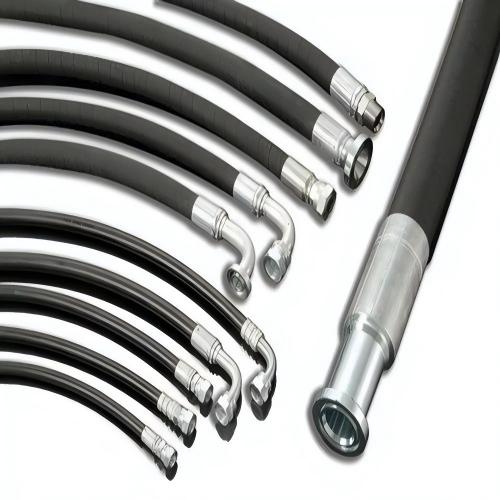
Cooling system EPDM multi-layer braided hose resistant to coolant corrosion temperature range -40 ℃~
1、 The chemical foundation of corrosion resistance: the "inert gene" of EPDM saturated molecular chains
The medium conveyed by the cooling system is usually a mixture of water and ethylene glycol (EG) or propylene glycol (PG) (with a volume ratio of about 50/50), supplemented with corrosion inhibitors and antifreeze agents. This type of coolant has swelling and extraction effects on ordinary rubber (such as nitrile rubber NBR or chloroprene rubber CR), and long-term contact can cause volume expansion, hardness decrease, and even inner wall cracking. The reason why EPDM (Ethylene Propylene Diene Monomer Rubber) has become the preferred material for coolant delivery is due to its saturated carbon carbon main chain structure - it does not contain unsaturated double bonds that are susceptible to chemical attacks, and has extremely high chemical inertness to ethylene glycol based coolant.
Laboratory data shows that after 1000 hours of contact with 50% concentration ethylene glycol coolant, the volume change rate of EPDM material can be controlled within ± 5%, and the hardness change does not exceed 10 Shore A. This chemical stability ensures that the inner wall of the hose does not swell or block the flow channel due to medium erosion in a cooling system that operates for 7 × 24 hours, nor does it precipitate impurities into the coolant and contaminate the system due to material degradation.
The adoption of peroxide sulfurization system further enhances the corrosion resistance performance. Compared to traditional sulfur vulcanization, peroxide vulcanized EPDM avoids the residue of metal salts such as zinc oxide (zinc white), fundamentally eliminating the risk of heavy metal ion precipitation contaminating the coolant. The 5427A series of EPDM pipes specifically designed for data centers use a peroxide vulcanization system to ensure excellent chemical compatibility with industrial grade cooling media.
2、 Structural skeleton: multi-layer weaving reinforcement and wide temperature range adaptation
The mechanical properties of EPDM multi-layer braided hoses are derived from the system integration of the "inner reinforcement layer outer layer" three-layer structure.
The inner rubber layer is made of black EPDM synthetic rubber, with a smooth surface and anti-static properties (resistance<1M Ω/m). It maintains a low friction coefficient and reduces flow resistance when in direct contact with coolant. The inner EPDM is designed with high airtightness, effectively reducing the slow evaporation or leakage of coolant and lowering the frequency of fluid replenishment during operation and maintenance.
The reinforcement layer adopts one or two layers of high-strength synthetic fiber weaving structure (such as polyester fiber or aramid fiber), which is the mechanical skeleton of the hose bearing system pressure and pulse impact. This structure allows the working pressure of the hose to reach 1.0-1.6MPa (approximately 150-300psi), and the burst pressure is 3-4 times the working pressure. Taking the Dixon LQC05 series as an example, the working pressure is 16 bar (approximately 1.6 MPa) and the safety factor is 3:1. The woven structure provides sufficient tensile strength while endowing the hose with excellent flexibility - the minimum bending radius can reach 2-3 times the diameter of the pipe, making it easy to flexibly lay pipes in small spaces such as cabinets.
The outer rubber layer is made of flame-retardant EPDM or weather resistant synthetic rubber, which has passed UL94 V-0 flame retardant certification - it can self extinguish within 10 seconds in the event of an open flame without producing ignition droplets, creating a passive fire barrier for data center electrical intensive cabinet environments. The outer adhesive layer has both ozone resistance and UV aging resistance, with no cracks tested for 150 hours at a 50pphm ozone concentration and 40 ℃.
-The wide temperature range of 40 ℃ to 150 ℃ is the core competitiveness of this hose. Low temperature end -40 ℃ ensures that the hose does not crack during low-temperature start-up in the winter computer room; The high-temperature end can withstand 150 ℃ for a short period of time, and can cope with server full load or abnormal temperature rise conditions in the cooling system. The Dayco branch heat dissipation pipes are also made of full EPDM material, which can operate stably for a long time within the range of -40 ℃ to+125 ℃. This temperature range covers the entire climate scenario from the polar edge to data centers in tropical regions.
3、 Application Adaptation: System Integration from Data Centers to Industrial Cooling
The application scenarios of EPDM multi-layer braided hoses have expanded from traditional industrial cooling to the rapidly growing field of liquid cooling in data centers. According to market research institutions, the global market size of EPDM hoses for liquid cooling systems is expected to reach approximately $488 million by 2025 and $813 million by 2032. Data centers/AI servers are the fastest-growing application areas.
In data center liquid cooling systems, EPDM hoses are used for flexible connections between rack mounted CDUs (cooling distribution units) and server node cold plates. Its flexibility and small bending radius enable the hose to freely pass through high-density wiring environments inside the cabinet, and with the UQD quick connector, it achieves "plug and break" maintenance. The UL94 V-0 flame retardant properties of the outer adhesive layer are a mandatory indicator for data center security selection. For special scenarios such as immersion liquid cooling, EPDM hoses have also passed compatibility verification.
In industrial cooling systems (such as automobile manufacturing, machining, wind power generation), EPDM hoses are used to transport cooling water, ethylene glycol mixture and slightly corrosive fluids. Their ozone resistance and anti-aging characteristics are suitable for outdoor or harsh environments. In the thermal management of new energy vehicles, EPDM material has long-term compatibility and wide temperature range adaptability to ethylene glycol based coolant, meeting the design requirements of power batteries and motor cooling systems.
In terms of selection and maintenance, it is necessary to select the corresponding pressure level (commonly 150-300psi) based on the system working pressure, ensure that the hose matches the type of coolant (compatible with water ethylene glycol/propylene glycol), and confirm the UL94 V-0 certification of the outer layer in scenarios with flame retardant requirements. During daily inspections, special attention should be paid to whether the outer adhesive layer is cracked or worn, and whether there is leakage at the joints. If visible cracks or exposed reinforcement layers appear on the outer adhesive layer, they should be replaced in a timely manner.
In summary, EPDM multi-layer braided hoses perfectly meet the systematic requirements of data centers and industrial cooling systems for "corrosion resistance, long service life, and high safety" due to their four core technologies: the corrosion resistance of EPDM material, the mechanical load-bearing capacity of multi-layer fiber braiding, the safety protection of UL94 V-0 flame retardant, and the wide temperature range of -40 ℃ to 150 ℃. From the extremely small bending radius of 2-3 times the diameter of the pipe to the zero precipitation guarantee of the peroxide vulcanization system, from the chemical inertness of water ethylene glycol to the UL94 V-0 passive fire barrier, every technical detail points to the same goal: to provide reliable guarantees for the thermal management system without leakage, aging, and pollution in a 7 × 24-hour uninterrupted cooling cycle.