In mining, steel smelting, tunnel construction, and heavy chemical industry operation sites, conveying hoses not only face high-speed erosion from internal abrasives, but also endure continuous mechanical collisions from the outside - the ejection impact of ore fragments, drag friction during equipment movement, and sharp object scratching at the operation site, all of which accelerate the damage to the outer layer of the hose. Under such working conditions, ordinary rubber outer rubber will scratch, peel off, and even crack within a few months, causing the reinforcement layer to be exposed and corroded, and the entire hose will be scrapped in advance. The UPE wear-resistant hose made of outer EPDM synthetic rubber is a professional solution for this "internal and external clamping" working condition - using UPE lining to construct an anti internal scouring barrier, using EPDM outer rubber layer to resist external mechanical damage and climate erosion, and using multi-layer composite structure to achieve system integration of "internal wear resistance and external weather resistance", becoming a reliable channel that can withstand "internal and external tests" in industrial sites.
News
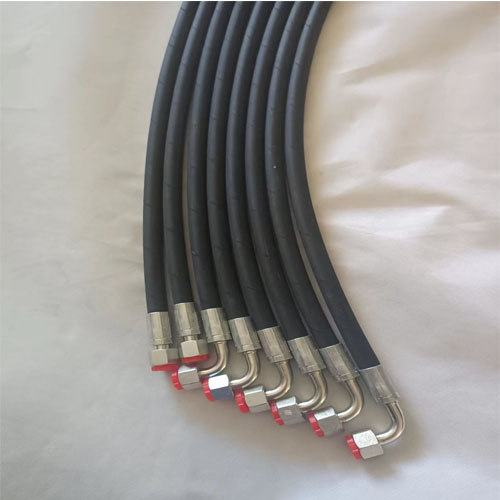
UPE wear-resistant hose outer layer EPDM synthetic rubber resistant to mechanical collision damage
1、 The "anti collision gene" of outer EPDM: high elasticity buffering and weather resistance protection
EPDM (Ethylene Propylene Diene Monomer Rubber), as an outer rubber layer material, has the ability to resist mechanical collision damage not only by being "thick" and "hard", but also by the synergistic effect of multiple mechanisms.
The high elasticity buffering mechanism is the first line of defense for EPDM against bumps. The molecular chain structure of EPDM endows it with excellent elastic recovery ability. When the hose encounters ore fragment ejection or equipment collision, the outer rubber layer absorbs the impact energy through elastic deformation, rather than directly transmitting the impact force to the internal reinforcement layer. This characteristic of "using softness to overcome rigidity" effectively avoids local stress concentration in the steel wire weaving layer caused by impact loads.
The enhanced tear and wear resistance of the formula further improves the damage resistance of the outer adhesive layer. Patent technology shows that introducing ultra-high molecular weight polyethylene powder (UPE micro powder) as a functional additive into EPDM substrate can significantly improve the wear resistance and tear resistance of the outer adhesive layer. Experimental data shows that adding 40 parts of ultra-high molecular weight polyethylene particles to an EPDM mixture can reduce wear by about 45% without affecting key mechanical properties such as tensile strength and compression set.
The essential difference between EPDM outer rubber layer and ordinary rubber is the aging decoupling that is resistant to ozone and ultraviolet radiation. The saturated main chain structure of EPDM is naturally inert to ozone attack. The product technical parameters show that the EPDM outer rubber does not crack even after continuous exposure to 50pphm ozone concentration and 40 ℃ for 150 hours. At the same time, UV absorbers are added to the outer rubber formula to effectively delay surface powdering under direct sunlight, making the hose less likely to expose the reinforcement layer due to surface aging and peeling during long-term service in open-pit mines.
2、 Three layer composite structure: system integration of internal wear resistance and external weather resistance
The long-term reliability of UPE wear-resistant hose's resistance to mechanical collision damage is the result of the synergistic effect of the three-layer structure of "inner lining layer reinforcement layer outer adhesive layer".
The inner lining layer is made of ultra-high molecular weight polyethylene (UPE), which is responsible for internal medium transportation and anti erosion function. The molecular weight of UPE is as high as millions, and its wear resistance is more than 3-4 times that of ordinary rubber. In long-term contact with hard particle media such as concrete, mortar, and slurry, the wear rate of UPE lining is extremely low, avoiding "inner layer wear through leading to the scrapping of the entire pipe".
The reinforcement layer is made of high-strength synthetic fiber weaving or steel wire winding structure, combined with a spiral steel wire skeleton design, to ensure that the hose does not swell or collapse under alternating positive and negative pressure conditions. Some anti-static models embed copper wires in the reinforcement layer to achieve safe electrostatic discharge.
The outer rubber layer is made of EPDM synthetic rubber that is ozone resistant, UV resistant, and wear-resistant, and is the core line of defense against external mechanical damage. The product specifications show that the working temperature range of EPDM outer rubber covers -40 ℃ to+100 ℃ (short-term tolerance to+135 ℃ steam sterilization), which is suitable for a wide temperature range from cold winter in the north to high temperature operation in summer. The outer adhesive layer can be selected in various colors such as black, red, yellow, blue, etc. High visibility colors are not only convenient for on-site pipeline identification, but also have higher UV reflectivity in light colored outer adhesives, which can further delay thermal oxidative aging.
3、 Industrial scenario adaptation: "Anti collision practice" from open-pit mines to steel smelting
The outer EPDM protective value of UPE wear-resistant hoses has been validated in multiple industrial scenarios.
Open pit mines and mining sites are one of the most frequent scenarios for mechanical collisions. Ore splashing, equipment dragging, and rock friction pose a continuous threat to the outer rubber layer. The high elasticity buffering and tear resistance characteristics of EPDM outer rubber make the hose less prone to penetrating damage when encountering gravel impact. The ozone resistant and UV resistant formula ensures that the surface of the hose does not crack after long-term outdoor exposure, avoiding the reinforcement layer from being exposed to rust due to the peeling of the outer adhesive.
In the scenarios of steel smelting and high-temperature dust transportation, the outer adhesive layer not only faces mechanical collisions, but also needs to withstand high-temperature environments. The heat and oxygen aging resistance of EPDM outer rubber enables it to maintain flexibility at sustained high temperatures of 80-100 ℃, making it less prone to hardening and cracking. High visibility red or yellow outer glue facilitates workers to quickly identify the purpose of pipelines in complex steel plant environments, reducing the risk of misoperation.
In construction sites and tunnel construction scenes, hoses often come into contact with sharp objects such as steel bars, formwork, and concrete blocks. The wear resistance and tear resistance of EPDM outer rubber effectively resist these contact damages, combined with the anti erosion characteristics of UPE lining, allowing the same hose to maintain a long service life under the dual test of "internal wear and external impact".
In terms of maintenance points, it should be noted that the outer adhesive layer is the "sacrificial layer" for the external protection of the hose. When the EPDM outer rubber shows deep scratches or extensive wear, it should be evaluated in a timely manner whether replacement is necessary to avoid exposing the reinforcement layer due to the failure of the outer rubber. In daily inspections, it is important to focus on observing whether there are penetrating cracks in the outer adhesive layer and whether there are signs of exposed reinforcement layers. These are key indicators for determining whether the hose has reached the replacement cycle.
In summary, the UPE wear-resistant hose made of outer EPDM synthetic rubber perfectly meets the systematic requirements of "internal wear resistance, external wear resistance, and long service life under all working conditions" in heavy industry scenarios such as mining, steel, and construction, with its EPDM high elasticity cushioning and tear resistant anti collision design, UPE lining's ultimate anti erosion performance, and three-layer composite structure for internal and external coordinated protection. From formula validation with a 45% reduction in wear to continuous service at 100 ℃, from the impact of gravel in open-pit mines to the high-temperature dust environment in steel plants, every material selection and structural detail points towards the same goal: to provide reliable guarantees for fluid transportation that can withstand bumps and wear in the internal and external pressure of industrial sites.