
In open-pit operation scenarios such as mining, tunnel excavation, and construction sites, hydraulic hoses are exposed to continuous impact and ground drag friction from gravel, sand, and rock debris for a long time. The ordinary outer rubber layer wears through in such working conditions within a few months, and then rainwater and sediment invade the reinforcement layer, causing steel wire corrosion and a sudden reduction in pulse life, ultimately leading to the premature scrapping of the entire hose. The wear-resistant polyurethane outer rubber hydraulic oil pipe is a professional solution for this working condition - using the molecular level wear-resistant mechanism of polyurethane material to construct a sand and gravel barrier, providing compliance guarantee with the SAE 100R7/R8 standard system, and improving the operational convenience of outdoor operations with lightweight and flexible design, becoming a reliable channel for "friction resistance and long life" in harsh working conditions of construction machinery.
News
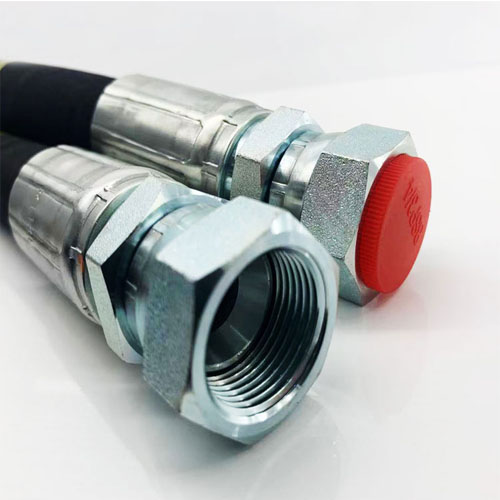
Hydraulic oil pipe wear-resistant polyurethane outer adhesive anti sand and gravel friction engineer
1、 The cost of external adhesive wear: the "invisible killer" of outdoor working conditions
At the operation site of heavy equipment such as excavators, crushers, and drilling rigs, the external damage suffered by hydraulic hoses goes far beyond simple friction. The impact of rock debris splashing, dragging during equipment movement, and repeated friction with the frame and rocks - multiple mechanical actions cause the ordinary outer rubber layer to quickly dissipate. Research shows that wear of the outer rubber layer is the main cause of premature scrapping of hydraulic hoses, with a much higher proportion of failures than aging of the inner rubber layer and joint failure.
Even more severe is the chain reaction after wear and tear. Once the outer adhesive layer is worn through, rainwater, mud, and chemically corrosive liquids will directly come into contact with the reinforcing layer steel wire. In a humid environment, copper plated steel wire can rust within a few weeks, and its tensile strength significantly decreases. The burst pressure of the hose may drop from 4 times the initial safety factor to less than 2 times. In harsh working conditions such as mines and buildings, unplanned shutdowns caused by external rubber wear can cost tens of thousands of yuan per maintenance, and the production capacity losses caused by shutdowns are difficult to estimate.
The standardized evaluation of wear resistance is an important basis for measuring the quality of the outer adhesive layer. The internationally recognized ISO 6945 standard simulates the continuous effect of sand and gravel friction on a flexible hose by moving a grinding tool back and forth on the specimen at a frequency of 1.25Hz; The corresponding national standard GB/T 12721-2007 in China also adopts this method. The products tested by this standard have clear quantitative indicators for their wear resistance level, providing technical basis for selection.
2、 The "anti sand and gravel code" of polyurethane outer adhesive: a complete barrier from material to certification
The excellent sand and gravel resistance of the wear-resistant polyurethane outer rubber hydraulic oil pipe is due to the systematic innovation of the outer rubber layer material.
Polyurethane outer layer is currently one of the outstanding wear-resistant solutions. The wear resistance index of polyurethane can reach 3-5 times that of natural rubber, and it exhibits durability far beyond traditional rubber in sand and gravel friction environments. Taking Transfer Oil's R7 series as an example, its outer rubber layer is made of polyurethane material, which is lighter and softer than conventional R1 rubber hoses. At the same time, its wear resistance is significantly improved, making it suitable for heavy-duty scenarios such as cranes and construction machinery. This series of products has also passed MSHA coal mine safety certification, which can meet the additional requirements for flame retardancy and anti-static in underground mines.
Ultra wear-resistant synthetic rubber is another mainstream technological path. By adding high structured carbon black and wear-resistant additives, the wear rate is controlled at an extremely low level while maintaining excellent oil and weather resistance. The composite reinforced outer adhesive further enhances the protection level. The outer adhesive layer designed specifically for extreme working conditions such as mining and forestry can not only resist rockfall impact, but also double the service life of the hose in mining applications.
At the standard system level, SAE 100R7 and SAE 100R8 correspond to wear-resistant thermoplastic hoses reinforced with polyester fibers and aramid fibers, respectively. They have a rated working pressure range of 70 bar to 420 bar and a working temperature range of -40 ℃ to+100 ℃, and can adapt to various outdoor work scenarios ranging from conventional hydraulic to high-pressure circuits. Some products add low friction materials to the polyurethane outer adhesive to make installation more convenient, especially suitable for densely packed engineering machinery piping scenarios.
3、 Adaptation to outdoor work scenarios: full coverage of working conditions from mines to construction sites
The practical value of wear-resistant polyurethane outer rubber hydraulic oil pipes has been fully verified in various outdoor operation scenarios of construction machinery.
In mining scenarios, hydraulic excavators, drilling machines, crushers and other equipment face continuous stone splashing and rock wall friction, requiring extremely high wear resistance for the outer rubber of hoses. Polyurethane outer adhesive can effectively resist rockfall impact and ground drag wear, combined with MSHA certified flame retardant and anti-static outer adhesive, while meeting the safety access requirements for underground coal mines. In construction, the hoses of cranes and concrete pump trucks often scrape against steel bars and formwork. The high scratch resistance of polyurethane outer glue makes the hoses less likely to be damaged when passing through the steel frame.
Lightweight and flexible are another advantage of wear-resistant polyurethane outer rubber hoses. Compared with conventional rubber hoses, polyurethane outer rubber thermoplastic hoses have a thinner outer diameter and lighter weight at the same pressure level, making them easier for operators to handle and flexibly lay pipes in high-altitude platform vehicles, scissor lift platforms, and other scenarios. The temperature adaptability covers from -40 ℃ to+100 ℃, which can maintain the flexibility of the outer rubber even in the cold winter in the north, avoiding cracking caused by low-temperature brittleness.
The selection and maintenance points also affect the actual service life of hoses in harsh working conditions. In areas with high risk of wear and tear, priority should be given to using products with polyurethane material clearly marked on the outer rubber layer, rather than universal rubber hoses; During daily inspections, special attention should be paid to the depth of wear of the outer rubber layer (if it exceeds 1mm, it is recommended to replace it). When the steel wire layer is exposed due to wear, it should be replaced immediately. For outdoor working conditions with much dust and strong vibration, the aging resistance and scratch resistance of polyurethane outer glue can significantly reduce the frequency of pipeline maintenance.
In summary, the wear-resistant polyurethane outer rubber hydraulic oil pipe, with its polyurethane material's 3-5 times higher wear resistance than rubber, compliance guarantee with SAE 100R7/R8 and MSHA certification, and adaptability to outdoor environments with a wide temperature range of -40 ℃ to 100 ℃, perfectly meets the systematic requirements of "anti sand and gravel friction and long service life" for engineering machinery outdoor operations. From mining to construction, from high-altitude platforms to heavy-duty cranes, the wear-resistant protection of each layer of polyurethane outer adhesive points towards the same goal: to provide reliable guarantees for hydraulic systems to withstand friction and impact in the operation site where gravel splashes.