
In acid fracturing operations in acidic oil and gas fields, fracturing fluids and formation fluids often contain high concentrations of hydrogen sulfide (H ₂ S). This highly toxic and corrosive gas not only poses a threat to the lives of on-site personnel, but also triggers "sulfide stress cracking" (SSC) of metal materials - the reinforcing layer steel wire may undergo brittle fracture within hours without warning under the synergistic effect of high stress and H ₂ S. Ordinary fracturing hoses are strictly prohibited in such working conditions, while hydrogen sulfide corrosion resistant fracturing hoses are a professional solution for this extreme working condition - using the chemical inertness of the inner HNBR/UPE material to resist H ₂ S infiltration erosion, using a sulfur resistant material system that complies with NACE MR0175 standard to ensure the safety of the reinforcement layer, and providing compliance access with API 7K Type B/API 16C dual standard certification, becoming a safe channel for "sulfur resistance, acid resistance, and high pressure bearing" in acid fracturing operations in acidic oil and gas fields.
News
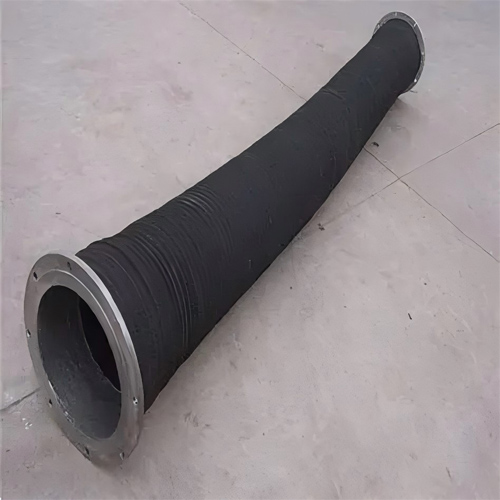
Fracturing hose resistant to hydrogen sulfide corrosion, specifically designed for acid fracturing o
1、 The destructive logic of H ₂ S: the 'invisible killer' from stress corrosion to material failure
In the fracturing operation of acid oil and gas fields (such as Sichuan Basin, Tarim Basin and Permian Basin in North America), the partial pressure of H ₂ S in the formation return fluid can reach several megapascals. The damage of H ₂ S to hoses is manifested in two ways: one is chemical erosion of the polymer lining, causing it to swell and degrade under high temperature and pressure; The second is the "sulfide stress cracking" (SSC) of the reinforcing layer metal material. The mechanism of SSC is that the acidic environment formed by the dissolution of H ₂ S in water allows hydrogen atoms to penetrate the lattice of the steel wire, and under tensile stress, they aggregate at the grain boundaries, leading to brittle fracture of the material at stress levels far below the yield strength.
The API 7K standard classifies fracturing hoses into Type A (universal) and Type B (acid environment specific), with the latter requiring all metal components to pass the hydrogen sulfide stress corrosion test according to NACE MR0175/ISO 15156 standards. This standard sets strict material selection boundaries based on H ₂ S partial pressure, temperature, and material hardness - for acidic working conditions with H ₂ S partial pressure ≥ 0.3MPa, the reinforcing layer steel wire must be selected from sulfur resistant steel grades that have undergone special heat treatment and have a hardness controlled below HRC 22, and SSC standard specimens must be verified batch by batch.
2、 Sulfur resistant material system: dual protection of inner lining and reinforcement layer
The "sulfur resistance" performance of hydrogen sulfide resistant fracturing hoses is an integrated system of "chemical inertness of the inner lining layer+sulfur resistant steel of the reinforcement layer", which is indispensable.
The inner lining layer is the first barrier to prevent H ₂ S penetration. UPE (ultra-high molecular weight polyethylene) has a natural chemical inertness to H ₂ S and acidic media due to its saturated molecular chain structure, and can stably withstand the synergistic corrosion of 28% hydrochloric acid and H ₂ S. For higher temperature scenarios (above 100 ℃), HNBR (hydrogenated nitrile rubber) lining is a better choice - the highly saturated HNBR molecular chains after hydrogenation treatment have minimal volume change rate in H ₂ S containing environments. Research has shown that using a peroxide vulcanization system that combines semi saturated/high saturated HNBR can produce specialized lining rubber materials that are resistant to high temperature and high pressure, corrosion, and hydrogen sulfide. For harsh acidic working conditions, Tauroflon is also available for use ™ Special lined specialized hoses designed specifically for transporting hazardous media containing H ₂ S.
The reinforcement layer is made of sulfur resistant steel wire that meets the NACE MR0175 standard, and is verified through strict hardness control (HRC ≤ 22) and anti SSC testing. The reinforcement layer steel wire adopts multi-layer high-strength ultra flexible steel wire or steel wire rope alternately spiral winding. Taking the ultra-high pressure working condition corresponding to a working pressure of 15000psi as an example, the blasting pressure is not less than 4 times the working pressure. The combination of UPE wear-resistant sealing layer and two-stage sealing design in some products effectively solves the problem of leakage and rapid wear of traditional hoses in high-pressure sand and sulfur-containing fluid transportation.
3、 Adaptation to acidic oil and gas field scenarios: from certification compliance to on-site safety
The practical application of H ₂ S resistant fracturing hoses in acidic oil and gas fields is reflected in the systematic guarantee of standard selection, standardized operation, and full cycle management.
At the level of selection criteria, API 7K Type B is the basic threshold for acid fracturing operations, requiring all metal components of the hose assembly to pass NACE MR0175 certification. For high-risk areas such as well control, API 16C throttling and well killing hoses need to be selected - in addition to the H ₂ S resistance requirement, they also need to meet the 704 ℃ × 30 minute fire rating (partially equipped with stainless steel armor), with a maximum inner diameter of 4 inches and a working pressure coverage of 5000-15000psi. As an industry representative, ContiTech has achieved exclusive supply of hydrogen sulfide resistant API 7K hoses, which can operate continuously under high temperature and acidic conditions at 90 ℃.
In terms of installation and on-site safety, the H ₂ S well site belongs to a high explosion-proof area. Before using the hose, it is necessary to verify the API 7K Type B or API 16C certification certificate and NACE MR0175 material report. The sealing structure at the joint requires additional confirmation of its resistance to H ₂ S penetration, using metal seals or special O-rings to avoid H ₂ S leakage caused by seal failure - once the hose joint leaks, H ₂ S leakage will directly endanger the safety of on-site workers. Each hose should be equipped with a unique traceability code to record the production date, batch, and test data, providing a complete technical file for the safety management of acidic oil and gas fields.
In summary, the hydrogen sulfide corrosion-resistant fracturing hose, with its HNBR/UPE lined H ₂ S chemical inert barrier, NACE MR0175 sulfur resistant steel reinforcement layer protection, and API 7K Type B/API 16C dual standard certification, perfectly meets the systematic requirements of "sulfur resistance, pressure resistance, and leakage prevention" for acid fracturing in acidic oil and gas fields. From the hardness control of NACE MR0175 to the fire rating of 704 ℃ × 30 minutes, from UPE's 28% hydrochloric acid tolerance to HNBR's 100 ℃ sulfur-containing condition verification, every material selection and certification standard points towards the same goal: to provide a flexible safety barrier for oil and gas production operations in high-risk fracturing sites with H ₂ S diffusion, without stress cracking and leakage.