
In the pipeline network of hydraulic systems, high-pressure hoses are like the "blood vessels" of the system, undertaking the core task of accurately transmitting hydraulic energy to various actuators. The response and reliability of the hydraulic system, from the lifting of the excavator boom to the opening and closing of the injection molding machine mold, largely depend on the pressure bearing capacity and pulse tolerance of the pipeline. The two-layer steel wire braided reinforcement structure is a classic solution in this demand context - it achieves a delicate balance between pressure bearing capacity and flexibility, with a working pressure of 35MPa and 4 times safety redundancy, becoming one of the most widely used high-pressure oil pipes in mining machinery, engineering equipment, and industrial hydraulic systems.
News
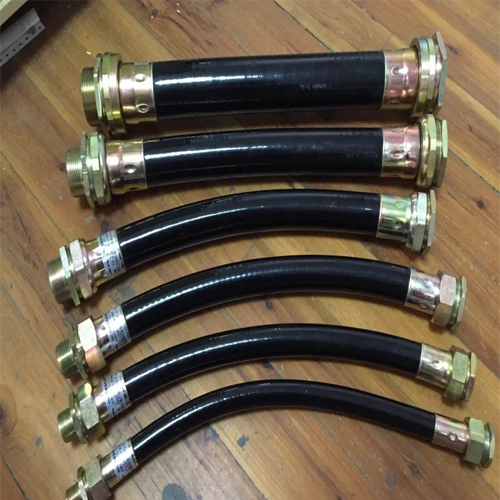
Steel wire braided rubber hose with two-layer steel wire braided reinforcement, working pressure 35M
1、 The structural logic of two-layer weaving: performance leap from "single-layer" to "double-layer"
The number of layers of steel wire braided reinforcement layer is the core parameter that determines the pressure rating of the hose. The working pressure of single-layer woven structure (1SN) is usually in the range of 10-25MPa, suitable for medium and low pressure circuits; And the two-layer steel wire weaving (2SN/2ST) increases the upper pressure limit to about 20-40MPa by adding a high-strength steel wire weaving layer. Taking the 1/4 inch specification as an example, the working pressure of the two-layer woven structure can reach 40MPa, and the bursting pressure can reach 160MPa (four times the working pressure).
Two layers of steel wire are not simply stacked, but formed into a "mesh skeleton" structure through precise weaving in alternating directions. When the hose is subjected to internal pressure, the two layers of steel wires work together to constrain the radial expansion of the pipe body, while sharing the axial tensile load - the inner layer mainly resists bulging deformation, while the outer layer inhibits elongation. This "division of labor and cooperation" design ensures even distribution of stress in the reinforcement layer, avoiding the local stress concentration that is prone to occur in single-layer structures under high pressure. The layers are firmly bonded by a high adhesive interlayer layer, ensuring that there is no interlayer slip or peeling under frequent pressure pulses.
The characteristic of decreasing working pressure with increasing diameter is a direct reflection of the mechanical law of this structure - small diameter specifications (3/16-3/8 inches) can maintain a high pressure bearing capacity of 33-41MPa, while large diameter specifications (1-2 inches) can be reduced to 8-16.5MPa.
2、 Three layer composite collaborative system: from inner layer sealing to outer layer protection
The two-layer braided hose can serve stably in 35MPa hydraulic systems for a long time, thanks to the system integration of the three-layer structure of "inner rubber layer reinforcement layer outer rubber layer".
The inner rubber layer comes into direct contact with hydraulic oil and is made of oil resistant synthetic rubber (usually nitrile rubber formula), which can withstand long-term erosion from mineral based hydraulic oil, soluble oil, and water ethylene glycol media. It remains non swollen and non peeling within the working temperature range of 40-80 ℃.
The reinforcement layer is the "skeleton" of the hose under pressure, which adopts a two-layer high tensile strength steel wire weaving structure. The precise control of weaving angle and density determines the dimensional stability of the hose under high pressure - if the weaving angle deviates from the ideal range, the hose may experience "elongation" or "shrinkage" under pressure, directly damaging the integrity of the joint seal. The volume expansion rate and length deformation of the structure are controlled within a very small range.
The outer rubber layer is the "armor" that resists external environmental erosion. It is made of synthetic rubber that is resistant to ozone, weather, and oil, and can effectively resist friction and scratching from mining rocks and metal supports. Once the outer rubber is worn through, the exposed steel wire will quickly rust and break, so the protective performance of the outer rubber is crucial for the service life of the hose under harsh working conditions.
3、 35MPa level application and system adaptation: from pressure matching to installation specifications
The 35MPa working pressure of the two-layer steel wire braided hose determines its typical application boundary in hydraulic systems. This grade of hose is widely suitable for the main hydraulic circuit of construction machinery - taking the common 220 type excavator as an example, the actual working pressure of the two-layer steel wire braided hose connected to the boom oil cylinder is about 32MPa, and the pulse pressure can reach 40MPa. At the same time, it is also suitable for general industrial hydraulic systems such as metallurgical forging, mining equipment, injection molding machinery, agricultural machinery, etc.
Selection should focus on three dimensions: first, pressure level matching - the working pressure of the hose should not be lower than the maximum working pressure of the system, and in scenarios with frequent pulses, it is recommended to choose a higher level or increase the safety factor; Secondly, matching the diameter and flow rate -1/4 inch specifications are suitable for pilot pipelines, and 3/4 inches and above are used for main supply pipelines; Thirdly, temperature range coverage - the standard type is suitable for temperatures ranging from -40 ℃ to+100 ℃, with an upper limit of+70 ℃ for water-based fluids.
The installation specifications directly affect the actual lifespan. The bending radius is usually not less than 8 times the diameter of the pipe, which can lead to stress concentration in the reinforcement layer and accelerate steel wire fatigue. Avoid twisted installation - if the hose twist angle exceeds a certain limit, it will cause uneven stress on the woven structure and shorten its lifespan. During daily inspections, special attention should be paid to the wear depth of the outer adhesive layer (if it exceeds 1mm, it needs to be evaluated and replaced), and whether there are signs of leakage in the joints. When the rate of change in outer diameter exceeds 5%, it indicates that the reinforcement layer may have been damaged and should be replaced immediately.
In summary, the two-layer steel wire braided reinforced steel wire braided rubber hose with a working pressure of 35MPa perfectly meets the systematic requirements of hydraulic systems for "reliable pressure bearing, universal adaptation, and long-term durability" with its double-layer braided "mesh skeleton" load-bearing structure, three-layer composite internal and external coordinated protection, and wide temperature range from -40 ℃ to 100 ℃ and multi medium adaptation. From the pulse impact of the excavator boom to the high-pressure mold locking of the injection molding machine, starting from -40 ° C extreme cold to continuous operation at 100 ° C, every pressure transmission and bending deformation point to the same goal: providing a reliable channel for various equipment on the transmission line of hydraulic power without bursting, leaking, or fatigue.