The standardization of hose specifications and the compatibility of fittings in hydraulic system pipeline connections directly affect the assembly efficiency of equipment manufacturing and the convenience of later maintenance. From a 3/16 inch pilot pipeline to a 2-inch main supply pipeline, different diameters correspond to differentiated flow and pressure requirements. The steel wire braided rubber hose with complete specifications is the basic solution for this selection and matching requirement - covering various hydraulic circuit needs with a wide diameter of 3/16 inch to 2 inches, ensuring compatibility with various brand joints through SAE/ISO standardized size system, and simplifying design selection and spare parts management with unified technical parameters.
News
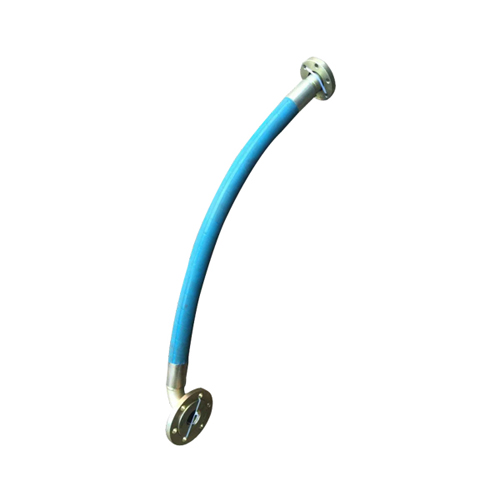
Steel wire braided rubber hose with an inner diameter of 3/16 to 2 inches, fully compatible with var
1、 3/16 to 2-inch caliber system: covering all scene requirements from pilot to main circuit
The diameter specification of the steel wire braided rubber hose directly determines its applicable position in the hydraulic system. The coverage range of 3/16 inches (approximately 4.8mm) to 2 inches (approximately 50.8mm) corresponds to the full scene requirements from auxiliary control to main drive. There is a significant difference in pressure bearing capacity among different calibers - taking the two-layer steel wire braided structure (compliant with SAE 100R2 standard) as an example, the working pressure of the 3/16 inch specification can reach 41.4 MPa, while the 2-inch specification is 8.1 MPa.
This pressure diameter inverse relationship originates from the fundamental principle of fluid mechanics: the larger the diameter, the greater the circumferential stress borne by the pipe wall, and the corresponding reduction in working pressure is required under the same reinforcement layer structure. Based on this feature, the 3/16 to 1/4 inch specifications are suitable for low-pressure precision control scenarios such as excavator pilot control oil circuits, proportional valve remote control pipelines, etc; 3/8 to 3/4 inch specifications suitable for main circuits such as boom cylinders and stick cylinders; A large diameter of 1 to 2 inches is used for high flow return and suction pipelines.
The specification range of large-diameter steel wire braided rubber hoses has been further expanded to over 76mm, and multi-layer steel wire reinforcement structures can be used to meet specific working conditions. This wide caliber coverage allows equipment manufacturers to complete the full circuit selection from pilot control to main supply in the same series of hoses, simplifying supplier management and spare parts inventory.
2、 Engineering value with complete specifications: how standardized dimensions simplify selection and spare parts management
Having complete specifications is not only a simple logic of being available in stock, but also reflected in the standardization of the size system and joint matching.
Unified outer diameter and tolerance control are core elements. Taking SAE 100R2 standard as an example, the outer diameter of the 3/16 inch specification is 13.2mm, the 2-inch specification is 67.3mm, and the dimensional tolerance is controlled within the range of ± 0.8mm to ± 1.5mm. This accuracy ensures the interchangeability between hoses and fittings from different manufacturers - the outer sleeve size design of the crimping type fitting corresponds one-to-one with the outer diameter of the hose, and any deviation in accuracy beyond this range will directly affect the crimping quality and sealing reliability. In production practice, hoses with the same inner diameter specification are often matched with corresponding fittings according to standards such as GB/T 44072.1-2024, achieving instant installation and use.
The on-demand customization of lengths ranging from 10 meters to 100 meters further enhances the engineering value of complete specifications. Small caliber (below diameter 25) hoses can be continuously produced up to over 100 meters, meeting the long-distance pipe laying requirements of large equipment; Large caliber (over 32 cm) with a fixed length of 20 meters, convenient for transportation and on-site installation.
3、 Connector adaptation system: Compatibility logic with interchangeable connectors of various brands
The complete specifications of the hose ultimately need to be compatible with the fittings in order to be converted into on-site usability. The joint adaptation system of steel wire braided rubber hose covers multiple international standard interface types.
In terms of threaded interfaces, ISO 12151-2 (24 ° cone seal) is currently one of the most widely used interface forms, covering hoses with nominal inner diameters ranging from 5mm to 38mm, and can be used for hose matching that complies with standards such as GB/T 3683 and GB/T 10544. In addition, SAE J518 flange interface is suitable for large-diameter high-pressure scenarios, NPT taper thread interface is suitable for North American standard equipment, and BSP parallel thread interface is more common in European equipment.
In terms of connection technology, mainstream products adopt an integral crimping structure (such as -4 to -20 specifications) that does not require peeling of the outer adhesive layer. The connection can be completed by directly crimping on the outer adhesive layer, greatly reducing the difficulty of assembly production; For larger diameters, a split joint design is adopted to enhance the bonding strength between the joint and the reinforcement layer. This structural design allows the same hose to be adapted to different brands of equipment by changing the type of connector, which is the technical foundation for achieving "one hose for multiple uses". Equipment manufacturers and end users only need to confirm the inner diameter, pressure rating, and number of reinforcement layers of the hose to select the corresponding interface form of the pre installed assembly from the standard product library.
In summary, the steel wire braided rubber hose with an inner diameter of 3/16 to 2 inches and complete specifications perfectly meets the systematic needs of hydraulic systems for "convenient selection, universal matching, and efficient maintenance" with its three core technologies of full circuit adaptation covered by wide caliber, standardized size exchange compatibility system, and multi interface form and brand adaptation capability. From the 41.4MPa high-pressure bearing of the pilot pipeline to the large diameter low flow resistance design of the return pipeline, from the 24 ° cone sealing joint to the cross brand compatibility of the flange connection, every specification and interface standard points to the same goal: to make the selection and matching of hydraulic pipelines simpler, more efficient, and more universal.