
In chemical production, the transport of corrosive media is integral to the entire process—spanning everything from raw material delivery and reaction stages to the transfer of finished products. Standard rubber hoses have a limited service life when exposed to strong acids and alkalis, while metal piping struggles to meet the demands for frequent disassembly and flexible connections. PTFE (polytetrafluoroethylene) hose assemblies offer a systematic solution for these operating conditions: they utilize the chemical inertness of carbon-fluorine bonds to withstand highly corrosive media and operate across a broad temperature range (-60°C to +200°C), covering processes from cryogenic to high-temperature environments. Furthermore, their integrated crimping and pre-installed fittings facilitate convenient "install-upon-delivery" maintenance, serving as reliable, flexible conduits within chemical piping systems that offer corrosion resistance and temperature resilience.
News
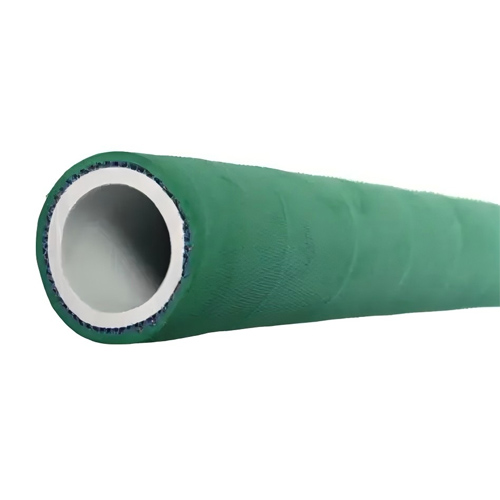
Corrosion-resistant hose assembly; PTFE hose; temperature range -60 to 200°C; chemical piping.
I. The Chemical Inertness of PTFE: From Molecular Structure to Universal Media Compatibility
PTFE is the preferred lining material for corrosion-resistant hoses in chemical piping systems, a choice rooted in its unique molecular structure. PTFE molecules are composed of carbon-fluorine bonds; the high electronegativity of the fluorine atoms creates a dense "electronic protective shield" around the carbon chain, rendering the material unreactive to almost all chemical molecules. This chemical inertness allows PTFE to withstand long-term exposure to sulfuric acid, hydrochloric acid, hydrofluoric acid, nitric acid, aqua regia, sodium hydroxide solutions, and various organic solvents.
In practical chemical piping applications, PTFE hose assemblies demonstrate compatibility with a wide spectrum of media, ranging from strong acids and alkalis to inorganic chemicals and organic solvents. The PTFE lining remains chemically stable when handling strong acids such as 98% concentrated sulfuric acid and 37% hydrochloric acid, and it exhibits excellent resistance to strong alkaline solutions like sodium hydroxide and potassium hydroxide. In the pharmaceutical and fine chemical sectors, PTFE linings meet FDA and USP Class VI certification standards; they do not leach metal ions or organic contaminants into the media, making them suitable for transporting high-purity pharmaceutical fluids and food-grade substances. The smooth, non-stick nature of the PTFE inner wall further enhances its utility in chemical piping systems. Its extremely low coefficient of friction minimizes fluid flow resistance, effectively reducing energy consumption during pumping. Crucially, the smooth interior resists the adhesion of colloids, crystals, and particulates; this facilitates easy flushing and cleaning when switching media, thereby reducing the risk of cross-contamination. For chemical media prone to crystallization or polymerization, the non-stick properties of the PTFE lining effectively prevent flow channel constriction and blockages caused by wall deposits.
II. Wide Operating Temperature Range (-60°C to 200°C): Stable Performance from Cryogenic to High Temperatures
Chemical production involves a vast temperature spectrum—ranging from below -60°C for the transport of cryogenic liquefied gases to over 150°C for high-temperature reaction fluids and steam-traced lines. PTFE hose assemblies operate within a range of -60°C to +200°C, with some models extending from -70°C to +260°C, enabling them to meet the demands of diverse chemical applications across extreme temperature conditions.
The low-end temperature of -60°C accommodates the transport of liquefied gases and cryogenic media. Unlike ordinary rubber, which tends to undergo a glass transition and become brittle at low temperatures, PTFE retains molecular chain mobility in cryogenic environments, preventing hose cracking caused by cold brittleness. The high-end temperature of 200°C covers applications involving high-temperature reaction fluids, hot oil, and steam tracing; PTFE is one of the few polymer materials capable of maintaining long-term chemical stability and resisting accelerated aging at temperatures above 200°C.
The value of this wide temperature range in engineering applications lies in the hose assembly's ability to adapt to the full cycle of temperature fluctuations in chemical plants, from cold winter start-ups to high-temperature summer operations. For piping connected to batch reactors that undergo periodic heating and cooling cycles, PTFE’s low coefficient of thermal expansion and resistance to thermal aging ensure that the hose is unlikely to develop cracks or suffer seal failure under repeated thermal shock. III. Assembly Integration: System Reliability through Pre-installed Flanges and Integral Swaging
The engineering reliability of PTFE hose assemblies depends not only on the chemical inertness and wide temperature adaptability of the PTFE liner but also on the systematic design of the end connections.
The integral swaging process is the core technology ensuring sealing reliability. In a controlled factory environment, CNC swaging equipment precisely controls the compression of the fitting onto the hose body within specified tolerances, ensuring a tight fit between the fitting stem and the PTFE liner to form the primary seal. The reinforcement layer utilizes stainless steel wire braiding or high-strength fiber winding; operating pressures range from 1.0 to 4.0 MPa, with a burst pressure exceeding four times the operating pressure. Following swaging, every assembly undergoes hydrostatic testing to guarantee zero leakage at the rated operating pressure.
Pre-installed flange fittings simplify on-site installation into three steps: alignment, bolt insertion, and tightening. Flange sealing faces are precision-machined prior to shipment and, combined with pre-installed PTFE gaskets or O-rings, establish initial sealing pressure. When high-pressure fluid enters, the medium pressure acts further upon the sealing face, creating a "self-tightening" sealing effect. Flange materials include carbon steel, 304 stainless steel, or 316L stainless steel, compatible with international standards such as ANSI, DIN, and JIS to ensure integration with existing piping systems.
Regarding selection and installation, compatibility between the medium and the PTFE liner must be verified; the reinforcement layer structure must be selected based on the system's operating pressure; and flange connection standards must match on-site equipment. During installation, the bending radius must not fall below the rated value (typically 5–8 times the hose diameter) to prevent excessive bending that could cause PTFE liner cracking or damage to the reinforcement layer. Routine inspections should focus on checking for leakage at the fittings and cracking in the outer rubber layer, ensuring the assembly maintains its factory-standard sealing reliability throughout its service life. In summary, PTFE hose assemblies perfectly meet the systematic requirements of chemical piping systems—namely corrosion resistance, temperature resilience, and reliable connectivity—thanks to three core technical features: the total chemical inertness derived from the carbon-fluorine molecular structure; adaptability to extreme temperature ranges from -60°C to 200°C; and a "ready-to-install" sealing design utilizing pre-installed flanges and integrated crimping. From handling long-term exposure to 98% concentrated sulfuric acid to ensuring the stable transport of cryogenic media at -60°C, and from rapid 30-minute on-site installation to mandatory hydrostatic testing of every assembly prior to shipment, the design of every PTFE liner layer and crimping process is driven by a single goal: to provide a reliable solution for process pipelines conveying corrosive media in chemical production—one that withstands corrosion and temperature fluctuations while ensuring quick installation and stable, secure operation.