
In marine chemical processing, offshore platforms, and coastal petrochemical facilities, piping systems are constantly exposed to environments characterized by high salt spray, high humidity, and splashes of acidic media. Standard carbon steel fittings often show signs of rust within weeks under such conditions; once the sealing surfaces corrode, connection reliability can no longer be guaranteed. Corrosion-resistant hose assemblies featuring 316L stainless steel fittings offer a systematic solution for these applications: the salt-spray resistance of molybdenum-alloyed 316L stainless steel ensures long-term reliability; PTFE/EPDM liners withstand chemical media erosion; and factory-prefabricated, integrally crimped designs enable "ready-to-install" convenience—making them a dependable choice for conveying corrosive media in marine chemical environments.
News
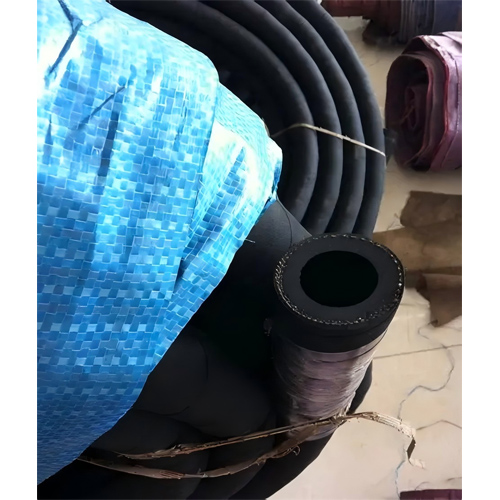
Corrosion-resistant hose assembly with 316L stainless steel fittings; salt spray corrosion resistant
I. The Secret to 316L Stainless Steel's Salt-Spray Resistance: How Molybdenum Defends Against Chloride Ion Attack
The status of 316L stainless steel as the preferred material for fittings in marine environments stems from the precise engineering of its chemical composition. Compared to 304 stainless steel, 316L contains an additional 2–3% molybdenum (Mo), an element that plays a decisive role in resisting chloride-induced pitting and crevice corrosion. In marine salt-spray environments, chloride ions are the primary cause of pitting corrosion in stainless steel; they disrupt the surface passivation layer, creating localized pits that can subsequently trigger stress corrosion cracking. The addition of molybdenum significantly enhances the stability and self-repair capability of the passivation layer, resulting in a Pitting Resistance Equivalent Number (PREN) of 24–28 for 316L in chloride-rich environments—far exceeding the 18–20 range of 304 stainless steel.
Control of carbon content is another critical characteristic of 316L. Its low carbon content (≤0.03%) effectively minimizes the risk of chromium carbide precipitation at grain boundaries during welding or high-temperature processing, thereby preventing intergranular corrosion. This characteristic is particularly critical for hose assembly fittings, which may experience localized high temperatures during the crimping process; the low-carbon content of 316L ensures microstructural stability, preventing any compromise in corrosion resistance caused by carbide precipitation.
In practical marine chemical applications, the salt spray resistance of 316L fittings has been thoroughly validated. In salt spray testing chambers, 316L stainless steel can withstand hundreds of hours of continuous exposure to a 5% sodium chloride solution at 35°C without showing significant signs of rust. 316L also performs exceptionally well in seawater splash zones and tidal zones, exhibiting a uniform corrosion rate far lower than that of carbon steel or low-alloy steel.
II. Multi-layer Composite Structure: System Integration from Corrosion-Resistant Lining to Fitting Sealing
The reliability of hose assemblies featuring 316L stainless steel fittings stems from the synergistic interaction of the lining material, reinforcement layer, and end-connection structure.
The choice of lining material depends on the chemical properties of the conveyed medium. For strong acids, strong alkalis, and organic solvents, PTFE (polytetrafluoroethylene) is used; its carbon-fluorine molecular structure imparts near-universal chemical inertness. For seawater, ethylene glycol coolants, and mild chemicals, EPDM (ethylene propylene diene monomer) lining is suitable, as its saturated molecular chain structure offers excellent resistance to water-based media. For acidic marine oil and gas environments containing hydrogen sulfide, HNBR (hydrogenated nitrile butadiene rubber) lining provides enhanced resistance to H₂S corrosion while maintaining oil resistance.
The reinforcement layer utilizes either a stainless steel wire braid or a high-strength synthetic fiber spiral wrap structure, supporting working pressures of 1.0–4.0 MPa and burst pressures exceeding four times the working pressure. While the stainless steel wire braid provides the necessary pressure-bearing strength, its 316L composition also offers salt spray corrosion resistance, eliminating the risk of rust and breakage associated with standard galvanized steel wire in marine environments. End connection is the most critical aspect of marine chemical applications. A flared-flange process is employed between the 316L fitting and the PTFE liner, extending the liner to the flange sealing face; this ensures the entire flow path is covered by PTFE, completely eliminating the risk of the metal fitting coming into contact with corrosive media. The fitting and hose body are joined via a precision crimping process, with the crimp compression strictly controlled within specified tolerances. The sealing structure utilizes either a PTFE-encapsulated O-ring or a solid PTFE gasket, maintaining long-term sealing integrity in environments exposed to salt spray and chemical splashes, without leakage caused by seal aging.
III. Suitability for Marine Chemical Applications: From Offshore Platforms to Coastal Petrochemical Facilities
Hose assemblies featuring 316L stainless steel fittings are applied across a wide range of marine chemical scenarios, extending from offshore platforms to coastal petrochemical installations.
On offshore oil and gas platforms, these hose assemblies are used to connect chemical injection skids to wellheads, hydraulic control lines to blowout preventers (BOPs), and seawater cooling systems to heat exchangers. The high-salinity, high-humidity platform environment places rigorous demands on the corrosion resistance of pipeline fittings; 316L fittings remain free from corrosion over long periods, even in splash and tidal zones. These assemblies typically require certification from classification societies such as ABS, DNV-GL, or LR to meet safety and access standards for offshore facilities.
In coastal petrochemical plants, the hose assemblies connect storage tanks to loading arms and reactors to manifolds, facilitating the transfer of saline wastewater, acidic chemicals, and seawater cooling media. The 316L fittings' resistance to chloride stress corrosion cracking (Cl-SCC) ensures a significantly longer service life in high-chloride coastal environments compared to standard carbon steel fittings. The outer rubber layer utilizes ozone- and UV-resistant neoprene or EPDM formulations, protecting the reinforcement layer from degradation caused by coastal sunlight and salt spray. Regarding installation and maintenance, 316L fittings should be tightened using a torque wrench to the specified torque to prevent seal failure caused by uneven bolt preload. For assemblies exposed to splash zones over extended periods, quarterly inspections are recommended to check for signs of pitting corrosion on the fitting surfaces and scratches on the sealing faces. If rust spots or damage to the sealing faces are detected, the fittings should be replaced promptly to prevent media leakage resulting from component failure.
In summary, the corrosion-resistant hose assembly featuring 316L stainless steel fittings perfectly meets the systematic requirements—salt spray resistance, corrosion resistance, and connection reliability—of marine chemical environments. This is achieved through three core technologies: a molybdenum-alloyed barrier against chloride-ion pitting, media compatibility via graded PTFE/EPDM/HNBR liners, and system integration utilizing flared ends and all-PTFE sealing surfaces. From a pitting resistance equivalent number (PREN) of 24–28 and validation through hundreds of hours of salt spray testing to class society certification for offshore platforms and suitability for high-chloride coastal petrochemical environments, every aspect of the 316L stainless steel and the crimping process is designed with a single goal: to ensure reliable, leak-free, and long-lasting connections for the transport of corrosive media in salt-laden marine chemical facilities.