
In sectors such as fine chemicals, high-pressure reactor systems, and the long-distance pressurized transport of corrosive media, the handling of chemical substances under high pressure represents a high-risk segment of any fluid system. Standard single-layer wire-braided hoses often struggle to maintain stability under sustained high operating pressure, frequently posing risks of bursting or leakage. An accidental release of high-pressure, highly corrosive media can not only destroy surrounding production equipment but also lead to severe safety incidents—such as personnel injuries from chemical splashes or explosions involving flammable or combustible substances. Designed specifically for high-pressure, corrosive-fluid transport, our double-layer steel-wire-braided, explosion-proof chemical hoses utilize a reinforced dual-layer steel-wire structure combined with optimized, corrosion-resistant materials, establishing a robust, two-tiered safety defense for high-pressure chemical handling.
News
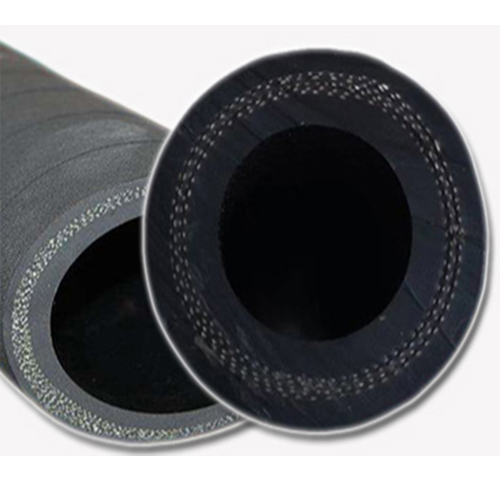
Double-wire-braided explosion-proof high-pressure chemical transfer hose
Double-Layer Steel-Wire-Braided Framework: A Dual-Layer, Pressure-Resistant, Explosion-Proof System
Standard single-layer wire-braided hoses are prone to localized stress concentrations and wire fractures when subjected to high-pressure pulses. The core advantage of this hose lies in its double-layer, offset-braided steel-wire framework, which significantly surpasses the pressure limits of conventional hoses, delivering explosion-proof-grade safety through its structural design.
The two layers of high-strength steel wire are arranged at distinct braiding angles, creating an interconnected, mutually supportive load-bearing network. When the high-pressure medium exerts radial force against the hose wall, the dual-layer structure distributes the pressure load evenly. This prevents the localized overloading common in single-layer designs, allowing the hose to achieve a rated operating pressure more than 60% higher than that of a single-layer hose of the same diameter. Even under conditions characterized by frequent high-pressure fluid pulses, the dual-layer framework effectively dissipates instantaneous pressure peaks, preventing the fatigue-induced wire fractures and sudden, catastrophic bursts often seen in single-layer hoses. A high-strength synthetic fiber buffer/isolation layer is incorporated between the two layers of steel wire. This prevents wear and wire breakage caused by direct contact and friction between the steel wire layers, while also optimizing the distribution of mechanical stress. This ensures that the load-bearing capacity of the entire reinforcement structure remains highly uniform across the full length of the hose, eliminating localized weak points. Furthermore, this structural design provides the hose with excellent resistance to negative pressure; even when used for high-pressure suction of corrosive media, the hose will not collapse or suffer from deformation of its flow cross-section, ensuring consistent and stable fluid transport. The entire reinforcement system has undergone rigorous burst testing at 1.5 times the rated pressure. The actual burst pressure far exceeds standard industry safety requirements, fundamentally eliminating the risk of sudden hose rupture during high-pressure operations.
Multi-layer composite construction with superior corrosion and weather resistance, designed for high-pressure, highly corrosive environments.
Chemical media under high pressure often exhibit increased permeability and erosive potential. In standard hoses, the corrosion-resistant layer can easily fail under high-pressure compression, leading to rapid media permeation, internal blistering, or delamination. This hose features a specially optimized multi-layer composite design, perfectly aligning corrosion resistance with high-pressure operational requirements and avoiding the common performance gap where a hose might be pressure-resistant but lack adequate corrosion resistance.
The inner liner—the layer in direct contact with the medium—utilizes a thickened, modified rubber compound specifically engineered for high-pressure, corrosive applications. By increasing the cross-link density and overall compactness of the rubber molecular structure, the design significantly reduces the ability of highly corrosive media to permeate the material under high pressure, preventing the rapid swelling and penetration often seen in standard inner liners when subjected to high-pressure media. The material for the inner rubber lining can be specifically selected based on the type of highly corrosive medium involved. For applications involving strong acids or alkalis, a specialized acid- and alkali-resistant base material is used; for applications involving organic solvents, a solvent-resistant modified material is employed. This ensures not only excellent corrosion resistance but also structural stability at the interface between the inner lining and the high-pressure medium, effectively preventing issues such as localized blistering or penetration by the medium.
The outer rubber layer is composed of a specially modified rubber that offers superior resistance to abrasion, aging, and environmental corrosion. It provides physical protection for the internal dual-layer steel wire reinforcement, shielding it from mechanical damage—such as scraping against equipment or abrasion from being dragged along the floor—thereby preventing premature wear that could expose the steel wires to rust. The weather resistance of the outer material is fully suited for complex industrial environments; even when exposed for long periods to chemical-laden atmospheres containing acid/alkali mists or ozone, the outer layer remains durable, resisting cracking, aging, or peeling. This comprehensive protection ensures the structural integrity of the dual-layer steel wire reinforcement, preventing any degradation in mechanical properties caused by external corrosion. The inner and outer layers are bonded to the central dual-layer steel wire reinforcement using a high-strength, specialized adhesive, creating a fully integrated structure. This ensures that the layers remain firmly bonded even under the repeated deformation experienced during high-pressure operation, maintaining the structural unity of the entire hose.
Explosion-proof sealing assembly, designed for a wide range of high-pressure chemical transfer applications.
In high-pressure chemical transfer, the risk of leakage is typically concentrated at the connection point between the hose and the coupling. This hose utilizes an integrated, explosion-proof coupling assembly that is precisely engineered to work with the dual-layer steel wire reinforcement. This solution effectively eliminates leakage risks at connection points under high-pressure conditions, making it suitable for a broad spectrum of high-risk chemical transfer applications. The specialized couplings are crafted from high-strength alloy and feature an internal dual-layer interlocking barb structure. During the crimping process, these barbs embed themselves between the two layers of steel-wire reinforcement, creating a rigid mechanical bond that effectively prevents the hose from being forcibly pulled out of the coupling under high-pressure conditions. Furthermore, the internal sealing shoulder of the coupling fits precisely against the thickened inner rubber liner, establishing a multi-point linear seal. This design ensures that, even when subjected to long-term exposure to high-pressure, highly corrosive media, there is no risk of leakage at the connection interface. Once assembled, every hose-coupling unit undergoes an extended pressure-retention test at twice its rated operating pressure, completely eliminating the possibility of seal failure at the connection points.
In practical chemical industry applications, this hose excels in demanding environments where standard hoses often fall short. It is well-suited for high-pressure transfer lines carrying corrosive media from high-pressure reactors, maintaining stable performance even under the intense pressure surges typical of such vessels. For long-distance, high-pressure transport of corrosive substances, it offers superior flexibility and deformation resistance compared to rigid piping, while also simplifying installation. In high-pressure cleaning operations, the hose remains durable even when exposed to highly corrosive chemical agents and the frequent, pulsating impacts of high-pressure fluid flow. Additionally, the hose can be equipped with an anti-static feature to dissipate static electricity generated by the high-speed flow of pressurized media, fully complying with safety regulations for explosive or flammable chemical environments.
For chemical enterprises, adopting this dual-layer steel-wire reinforced high-pressure chemical transfer hose significantly enhances safety margins in corrosive, high-pressure transport processes. It reduces the likelihood of critical incidents—such as hose bursts or leaks—while also extending the service life of the piping, thereby minimizing unplanned production line downtime caused by equipment failure. In routine operation and maintenance, simply conducting periodic checks for significant wear on the outer layer and signs of leakage at the connection points ensures long-term, stable performance. This establishes an explosion-proof safety barrier for high-pressure, highly corrosive chemical transport applications, serving as a highly reliable core component for the conveyance of various high-pressure chemical fluids.