
In settings such as outdoor mining operations in frigid northern regions, winter open-pit dredging projects, and the transport of chemical materials in cold climates, standard wear-resistant rubber hoses rapidly harden and become brittle at temperatures well below zero. Even minor bending or impact can cause the hose wall to crack, leading to leaks. This not only drives up operational and maintenance costs due to frequent replacements but also poses significant safety risks—particularly when the transported media are highly abrasive or corrosive. Our high-toughness, wear-resistant UPE (Ultra-High Molecular Weight Polyethylene) hoses are engineered to remain crack-free at temperatures as low as -40°C. Through comprehensive optimization—from the modification of the UPE base material to the design of the overall composite structure—these hoses effectively resolve the issue of brittle failure in cold environments, providing a highly reliable, flexible solution for the transport of abrasive fluids in frigid regions.
News
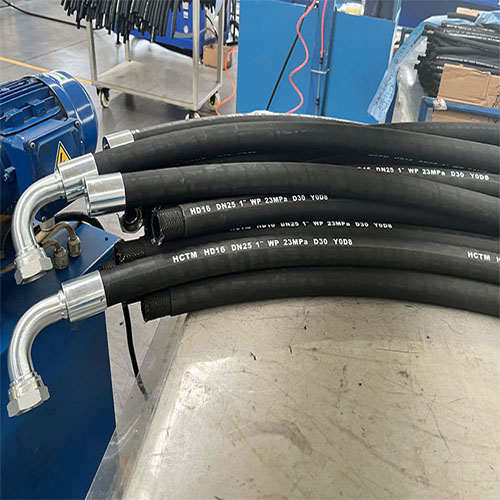
Highly Tough, Wear-Resistant UPE Hose: Remains Crack-Free in -40°C Low-Temperature Environments
Modified UPE for Low-Temperature Flexibility: Exceptional Wear Resistance and Toughness in Extreme Cold
Standard, unmodified UPE exhibits significant performance limitations in low-temperature environments. As temperatures drop below zero, its impact toughness declines rapidly; at temperatures below -20°C, the material becomes hard and brittle, causing the inner liner to crack under even slight external impact—making it entirely unsuitable for extreme cold conditions. Our specialized low-temperature hose addresses this by modifying the UPE base material during polymerization. This process preserves the material’s inherent, superior wear resistance while overcoming the limitations that low temperatures typically impose on its toughness.
During the polymerization of the UPE, the branched structure and crystallinity of the molecular chains are precisely adjusted to minimize the tendency for molecular chains to "freeze" (lose mobility) at low temperatures. Furthermore, the inclusion of specialized toughening agents—designed specifically for cold-climate applications—lowers the glass transition temperature of the modified UPE liner to well below -40°C. As a result, the material retains excellent elasticity and impact toughness, even after prolonged exposure to extreme cold. Low-temperature drop-weight impact testing has verified that the hose liner remains free from any fracturing or cracking, even when subjected to high-intensity external impacts at -40°C. Unlike standard UPE materials, which can become as brittle as glass at low temperatures, this modified UPE retains its structural integrity. Crucially, the modification process does not compromise the ultra-long molecular chain structure of the UPE; consequently, its core wear resistance remains virtually undiminished. In fact, its wear life at -40°C is more than five times that of conventional low-temperature wear-resistant rubber, effectively avoiding the common trade-off where increased toughness comes at the expense of wear resistance.
Furthermore, the modified low-temperature UPE retains its exceptional chemical inertness. It remains resistant to the vast majority of corrosive media—including acids, bases, and salts—ensuring that the liner does not swell or degrade when transporting corrosive mineral slurries or abrasive chemical media in cold-climate winter conditions. The extremely low coefficient of friction on the inner surface remains constant even at low temperatures, allowing high-viscosity slurries to flow smoothly. This prevents issues such as scaling on the pipe walls or a reduction in the effective flow cross-section—even when the medium thickens due to the cold—thereby maintaining consistent, high-volume transport efficiency.
A fully integrated, low-temperature-resistant composite structure ensures stable mechanical performance during thermal cycling.
Relying solely on a modified UPE liner is insufficient to meet the complex mechanical demands placed on an entire hose assembly in extreme cold. Every layer of this hose is constructed from materials specifically optimized for low-temperature performance, ensuring the entire assembly maintains robust mechanical stability at -40°C without any sudden degradation in performance.
Surrounding the modified UPE liner is a specialized, low-temperature-resistant adhesive transition layer. This layer maintains sufficient bonding strength even in extreme cold, avoiding the hardening, embrittlement, and subsequent delamination often seen with conventional adhesives at low temperatures. This ensures a seamless, integrated bond between the UPE liner and the external reinforcement layers, eliminating the risk of the liner separating or delaminating when the hose is bent in cold environments. The intermediate reinforcement layer features a braided composite structure of high-strength, flexible steel wire—specially toughened for low-temperature performance—and low-temperature-resistant synthetic fibers. Unlike standard carbon steel wires, which are prone to brittle fracture in cold conditions, these selected reinforcement materials maintain exceptional tensile strength and impact resistance even at -40°C, ensuring they do not become brittle or break. By precisely controlling braiding tension and density, the reinforcement layer forms a highly resilient, load-distributing support network. In extreme cold, this network provides stable support under rated operating pressures—preventing hose bursts—while effectively dispersing external forces during dragging or bending, thereby avoiding localized stress concentrations that could otherwise lead to wall cracking.
The outer cover is composed of a specially modified rubber compound designed to withstand temperatures as low as -40°C. It remains flexible and resistant to wear and abrasion in extreme cold, avoiding the hardening and embrittlement typical of standard outer covers. During field operations in cold regions, the outer layer resists the surface cracking or flaking often seen in conventional hoses when subjected to friction; it maintains a robust, intact protective barrier, preventing the internal reinforcement layer from being exposed to the frigid environment and ensuring the long-term structural integrity of the hose. The entire composite structure has passed the -40°C low-temperature cold-bend test as required by API standards; when bent to its specified minimum bend radius in extreme cold, the hose shows no signs of wall cracking or delamination, fully meeting structural integrity requirements.
Versatile performance for cold-region operations, significantly reducing maintenance and operational costs in extreme cold.
Designed specifically to address the challenges of outdoor operations in frigid northern regions, this -40°C, high-toughness, UPE-lined wear-resistant hose is engineered to excel in complex, cold-climate conditions—overcoming transport challenges that standard wear-resistant hoses simply cannot handle. In open-pit mining operations in northern regions during winter, these hoses can be bent and connected for immediate use, even after being left outdoors in temperatures as low as -40°C. Unlike standard hoses—which would require thawing in a heated space to prevent them from cracking or shattering upon the slightest bend—these hoses remain flexible, significantly boosting operational efficiency in extreme cold. In winter dredging projects within cold climates, where both surface and underwater temperatures fall below freezing, these hoses can withstand prolonged immersion in icy water and repeated bending or dragging by dredgers without the pipe walls becoming brittle or cracking. This eliminates the need for costly heat-tracing or insulation systems, substantially reducing project expenditures. Similarly, in outdoor chemical industrial parks located in cold regions, these hoses maintain their structural integrity despite long-term exposure to extreme cold, wind, and snow. They do not suffer from widespread brittle failure, which greatly reduces the labor and frequency required for pipeline replacement during the winter months.
Furthermore, this hose achieves an optimal balance between low-temperature performance, wear resistance, and corrosion resistance—avoiding the common trade-off where a hose might be cold-resistant but lack durability. It is well-suited for a variety of demanding applications in cold regions, including the transport of highly abrasive slurries and corrosive chemical media. For operational teams in these environments, adopting this high-toughness, wear-resistant hose—rated for -40°C—not only resolves the persistent issue of pipelines cracking and failing in the cold, but also slashes procurement and replacement costs. It prevents emergency production shutdowns caused by sudden pipeline ruptures and mitigates safety and environmental risks associated with the leakage of highly abrasive or corrosive materials. During routine maintenance, there is no need for extensive heat-tracing or insulation to prevent freezing; simply conducting periodic inspections for significant mechanical abrasion or damage is sufficient to ensure the long-term, stable operation of the hoses. As the mining, dredging, and chemical industries continue to develop in the frigid regions of the North, specialized wear-resistant rubber hoses—purpose-engineered for low-temperature operating conditions—are progressively replacing conventional hoses, establishing a highly resilient safety barrier for the transport of abrasive fluids in extreme cold environments.