
On ocean-going vessels, hydraulic systems serve as the power core for critical equipment, including steering mechanisms, hatch cover operating systems, cranes, and dynamic positioning systems. These systems operate in extreme marine environments characterized by high salinity, high humidity, and frequent exposure to seawater spray. Standard hydraulic hoses designed for land-based applications quickly succumb to issues such as outer-layer degradation, corrosion of the internal steel-wire reinforcement, and fluid leakage. Such failures can lead to sudden malfunctions in a vessel’s hydraulic systems, posing serious safety risks during long-haul voyages. Specifically engineered for marine conditions—from material selection and structural design to protective systems—these seawater-resistant, steel-wire-reinforced hydraulic hoses establish a robust barrier against corrosion, ensuring highly reliable, flexible fluid transmission for shipboard hydraulic systems in harsh marine environments.
News
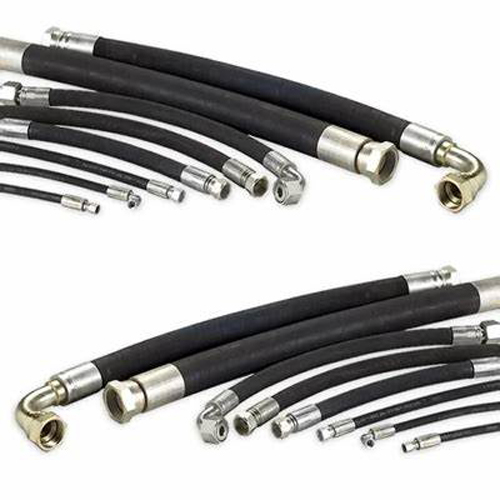
Seawater-Corrosion-Resistant Wire-Wound Hydraulic Hoses for Marine Hydraulic Systems
A Triple-Layer Anti-Corrosion Material System for Comprehensive Protection
In high-salinity marine environments, the rubber outer layers and steel-wire reinforcements of standard hydraulic hoses can develop cracks and rapid corrosion within just a few months—rendering them entirely unsuitable for the demands of long-term ocean-going operations. This specialized marine hydraulic hose features a triple-layer, gradient-based anti-corrosion material system. It provides comprehensive defense against the combined onslaught of seawater, salt spray, and corrosive hydraulic fluids, spanning from the outer protective layer and the structural reinforcement to the inner layer that comes into direct contact with the hydraulic medium.
The outermost layer utilizes a specially modified, seawater-resistant neoprene compound. This formulation incorporates functional additives that provide resistance against salt spray, ultraviolet (UV) radiation, and ozone. Consequently, even when subjected to constant seawater spray and high-humidity, salt-laden air, the outer rubber does not suffer from the rapid swelling, chalking, or cracking typical of conventional rubber. Accelerated salt-spray aging tests have confirmed that the outer layer retains its structural integrity even after thousands of hours of continuous exposure; it shows no significant cracking or delamination, thereby providing a solid, primary line of defense against corrosion for the internal components. The internal steel-wire reinforcement undergoes a specialized, marine-grade passivation treatment. This process creates a dense, protective passive film on the surface of the high-strength, high-toughness steel wires. Even if a small amount of seawater penetrates the outer protective layer and reaches the steel wires, it will not trigger rapid electrochemical corrosion—effectively eliminating the common issue where the steel-wire reinforcement of standard hydraulic hoses corrodes through and snaps within a short period in marine environments. Furthermore, the rubber layers separating the steel-wire plies utilize a special, seawater-resistant formulation. This significantly increases resistance to moisture vapor permeation, further slowing the ingress of corrosive agents toward the internal reinforcement and providing a second layer of corrosion protection.
The inner rubber liner is composed of a modified nitrile rubber (NBR) formulation engineered for marine conditions. It offers long-term, stable resistance to the various anti-wear hydraulic fluids commonly used in marine hydraulic systems, while also withstanding the corrosive and erosive effects of seawater emulsions that may accidentally enter the system. Unlike standard nitrile rubber, which can rapidly degrade and lose its sealing integrity upon contact with seawater, this material provides a third layer of corrosion protection for the hose interior. This comprehensive, three-tiered anti-corrosion system is perfectly suited to the complex, corrosive conditions of marine hydraulic systems, substantially extending the service life of the hoses in maritime environments.
Structural Optimization for Marine Conditions: Stable Mechanical Performance in Extreme Sea States
During a voyage, a vessel is subject to constant motion—swaying and jolting—caused by ocean waves. Consequently, hydraulic hoses are exposed to continuous, low-amplitude vibrations and repetitive bending. Additionally, the high-temperature environment within the engine room and the extreme temperature fluctuations on open decks impose far more rigorous demands on structural and mechanical stability than those encountered in land-based applications. This seawater-resistant, steel-wire-reinforced hydraulic hose has undergone comprehensive structural optimization tailored to the unique challenges of the marine environment, ensuring long-term, stable mechanical performance even under complex sea conditions. The hose features multiple layers of high-strength, corrosion-resistant steel wire, applied in a bi-directional, balanced-angle spiral wrap. The wires are arranged so that they never intersect, fundamentally eliminating the risk of wire breakage caused by friction at the crossover points—a common issue in standard braided hoses. This design ensures that, even under the continuous vibration experienced during long-term maritime voyages, the internal reinforcement structure remains free from wear or fatigue-induced wire failure. The load distribution of the entire spiral-wound structure has been optimized through precise mechanical simulation. The hose’s rated working pressure fully encompasses the requirements of critical shipboard hydraulic systems, such as steering gear and cranes, while its burst pressure—exceeding four times the working pressure—provides a substantial safety margin to withstand the instantaneous pressure spikes that can occur in extreme sea conditions.
The hose’s overall flexibility has been specifically engineered, with a minimum bend radius of just eight times its outer diameter. This allows for compact routing within the confined spaces of a ship’s engine room, eliminating the need for forced bending and preventing premature failure caused by localized stress concentrations. Furthermore, the hose is designed for an operating temperature range of -40°C to 120°C; it remains stable whether exposed to the extreme cold of an open deck during polar voyages or subjected to the high-heat environment near power units in the engine room, with no risk of the rubber compound’s performance degrading due to temperature extremes. The hose assembly has successfully passed vibration fatigue tests in accordance with maritime industry standards. Under simulated conditions of continuous, long-term vibration—subjected to hundreds of thousands of cycles—the hose’s structural integrity remained intact, with no signs of leakage or localized bulging.
Fully compliant with classification society standards, ensuring safety and reliability throughout the entire lifecycle of deep-sea operations.
Hydraulic hoses are critical components for maritime safety and must meet stringent regulatory requirements. Standard industrial hydraulic hoses designed for land-based applications are entirely unsuitable for the compliance and long-term, deep-sea operational demands of the maritime sector. This seawater-corrosion-resistant, wire-reinforced hydraulic hose is designed in strict accordance with the rigorous standards required for marine equipment. From the coupling assemblies to full-system integration, it comprehensively meets the safety requirements for deep-sea maritime operations.
The accompanying couplings are crafted from marine-grade stainless steel or highly corrosion-resistant alloys and have undergone a passivation treatment. This ensures that, even with long-term exposure to high-salinity, salt-spray environments, the components remain free from severe rust—preventing issues such as reduced connection strength or leaks at the sealing surfaces. The connection between the coupling and the hose is secured via a high-precision, integrated CNC swaging process; the internal interlocking structure of the coupling embeds firmly into the hose’s wire-reinforcement framework, creating a rigid, unified assembly. This design eliminates the risk of couplings loosening or the hose detaching, even under the constant motion and vibration typical of vessel operations. Furthermore, the sealing system utilizes specialized, seawater-resistant components; should any seawater reach the sealing interface, these components remain durable and effective, ensuring consistent, long-term sealing performance.
The complete hose assembly can undergo type testing and certification in compliance with the standards of various classification societies, fully satisfying maritime regulatory requirements. Users can install the hoses directly upon procurement, without the need for additional, complex marine-suitability verification. In practical maritime applications, these hoses are ideally suited for a wide range of critical hydraulic systems: they ensure stable operation for ship steering circuits—even under persistent vibration—thereby guaranteeing the reliability of steering power transmission, a vital safety function for deep-sea voyages. For hydraulic circuits operating on open decks—such as those for hatch covers or cranes—the hoses’ exceptional resistance to seawater corrosion ensures an extended service life, significantly simplifying maintenance by reducing the need for replacements while at sea. Within the engine room, the hoses are also well-suited to high-temperature, high-humidity conditions, remaining resistant to premature corrosion-related failure over long periods of operation. For vessel operators, adopting these seawater-corrosion-resistant, wire-reinforced hydraulic hoses offers significant advantages. It enhances the resistance of shipboard hydraulic systems to marine corrosion, mitigates the risk of emergency repairs due to unexpected hose failures during deep-sea voyages, and extends service intervals—thereby reducing the costs associated with spare parts and labor during port maintenance. Ultimately, this provides a robust safeguard for the reliable operation of hydraulic systems on ocean-going vessels.
As the global shipping industry continues to evolve, the demands for the long-term, continuous operation of marine equipment are steadily increasing. Consequently, these specialized hydraulic hoses—engineered specifically for corrosive marine environments—are progressively replacing standard, land-use hydraulic hoses. They are becoming the industry-standard component for hydraulic systems across a wide range of ocean-going vessels, fortifying the fluid-conveyance infrastructure essential for safe maritime navigation.