
In high-volume seawater transport scenarios—such as those found in coastal ports, offshore water intake and discharge projects, and circulating water systems for coastal power plants—DN254mm large-bore flexible hoses serve as critical components for suction and discharge operations. Standard large-bore rubber hoses often fail prematurely under these conditions due to issues like chloride-induced internal corrosion, collapse under negative pressure, or the rusting and fracture of their structural reinforcement. Such failures not only drastically reduce transport efficiency but also incur high costs related to frequent replacements and operational downtime. The DN254mm seawater-resistant suction and discharge hose is specifically engineered for these demanding applications; it is designed to handle both high-pressure delivery and high-vacuum suction, offering a highly reliable flexible piping solution for large-scale seawater transport.
News
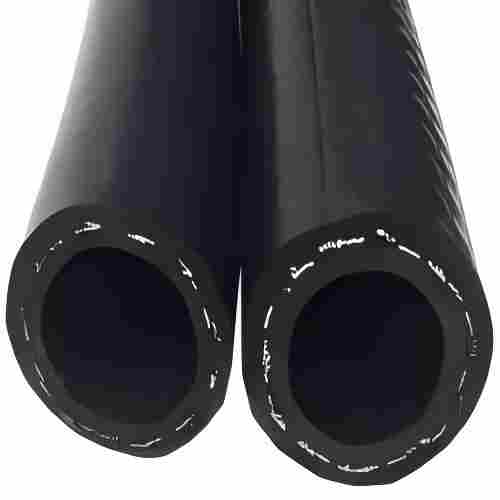
DN254mm Large-Diameter Seawater Suction and Discharge Rubber Hose (Seawater Corrosion-Resistant)
Featuring a consistent DN254mm bore, this high-capacity hose is optimized for large-volume seawater suction and discharge. Standard large-bore hoses often suffer from significant diameter reduction at the couplings, which constricts the flow cross-section. This not only causes a sharp increase in flow resistance and energy consumption but also triggers intense turbulence at the constricted points, accelerating erosion and wear on the hose walls and substantially shortening the product's service life. In contrast, this DN254mm hose utilizes an integrated, constant-bore design; the full DN254mm cross-section is maintained throughout the entire length—from the main body to the connection points—ensuring there are no "bottlenecks" or localized constrictions.
This unobstructed, full-bore DN254mm flow path ensures that the seawater remains in a stable, laminar flow state. By eliminating sudden changes in diameter that would otherwise cause turbulent vortices, the design significantly reduces flow resistance during operation. Field test data indicate that, under identical high-flow transport conditions, this constant-bore hose—as opposed to conventional large-diameter hoses with localized constrictions—reduces pressure loss during seawater transport by over 40%. This translates to a nearly one-third reduction in the energy consumption of the associated transport pumps, offering users significant electricity cost savings during long-term, high-volume operations.
Furthermore, the smooth, continuous inner surface (DN 254 mm) significantly minimizes the likelihood of marine larvae, sediment, and debris adhering to or depositing on the pipe walls. This prevents the gradual reduction of the flow cross-section—a common issue where the accumulation of marine organisms and scale buildup compromises performance over time—ensuring that the hose maintains its original high-flow efficiency throughout its service life. Even when transporting nearshore seawater containing suspended sediment, the smooth interior reduces the erosive and abrasive impact of solid particles, thereby extending the wear life of the hose’s inner lining. With a nominal diameter of 254 mm, the hose is well-suited for high-volume seawater transport—handling hundreds of cubic meters per hour—making it ideal for applications such as circulating water systems in coastal power plants, seawater intake systems for desalination plants, and large-scale land reclamation projects. Its inherent flexibility also allows for easy routing across complex coastal terrain, eliminating the need for the extensive elbow-fitting construction required by rigid piping systems.
Corrosion-resistant composite reinforcement structure: resistant to collapse under negative pressure and capable of bidirectional transport.
Conventional large-diameter suction and discharge hoses that rely solely on simple cord-reinforcement structures cannot withstand the high negative pressure (vacuum) encountered during seawater suction; they are prone to collapsing, which completely obstructs the flow path and halts operations. Conversely, hoses reinforced with standard carbon-steel spiral wire are susceptible to rapid electrochemical corrosion when submerged in seawater. The resulting rust—which occupies a larger volume than the original metal—can exert internal pressure that cracks the hose wall, leading to premature failure. This DN254mm large-bore hose features a marine-grade, corrosion-resistant composite reinforcement structure, designed to handle both positive-pressure delivery and negative-pressure suction operations.
The reinforcement layer incorporates a dual-ply, cross-wound high-strength polyester cord fabric, which evenly distributes internal stress during positive-pressure seawater transport. This enables the hose to accommodate a rated positive working pressure range of 0.6 MPa to 1.6 MPa—covering standard seawater delivery requirements—with a substantial safety margin, ensuring no abnormal wall bulging or leakage occurs during high-flow, pressurized transport. Beneath the cord fabric layer lies a continuous, marine-grade, corrosion-resistant helical steel wire skeleton. This high-strength, passivated (anti-corrosion treated) steel wire provides rigid structural support, capable of withstanding negative pressures (suction) of up to -0.09 MPa. Even under the extreme conditions of high-flow suction, the hose remains resistant to collapse or flattening, ensuring the integrity of its DN254mm flow cross-section.
The surfaces of all metal helical wires are treated to form a dense, passivated protective film, preventing rapid or widespread corrosion during prolonged immersion in seawater—effectively overcoming the common issue where standard carbon steel wires would otherwise rust through quickly. The helical wires are fully encapsulated within a seawater-resistant rubber matrix, eliminating any risk of localized exposure and further isolating the metal framework from direct contact with seawater to significantly slow the onset of corrosion. All bonding interfaces within the reinforcement structure utilize specialized, seawater-resistant adhesives, which prevent delamination or blistering—even after long-term seawater immersion—thereby maintaining the structural cohesion of the entire composite framework. The complete reinforcement structure has undergone thousands of alternating positive- and negative-pressure test cycles; it remains structurally intact, showing no deformation or delamination, and is perfectly suited for the dual-load demands of seawater suction and discharge operations. A Comprehensive, Multi-Layered Seawater Corrosion-Resistance System for Long-Term, Stable Service in Marine Environments
Large-diameter (DN254mm) seawater suction and discharge hoses are typically deployed in conditions involving prolonged immersion in seawater, compounded by exposure to salt spray and intense ultraviolet (UV) radiation—environments where conventional, single-material corrosion-resistant solutions fail to ensure long-term, stable operation. This hose features an integrated, multi-layered corrosion-resistance system that extends from the interior to the exterior, providing robust protection against chloride ions, marine biofouling, and degradation caused by salt spray and UV exposure, thereby ensuring a long service life in marine environments.
The inner lining, which comes into direct contact with seawater, utilizes a specialized blend of EPDM and seawater-resistant rubber. This modified formulation prevents the rapid swelling and degradation commonly seen in standard rubber when exposed to high-chloride seawater over extended periods. Furthermore, the surface of the lining undergoes a special low-surface-energy treatment, which inhibits the attachment and growth of marine organisms such as shellfish and algae—significantly reducing the risk of flow-path constriction or pipeline blockage. The intermediate reinforcement layer is fully encapsulated within multiple layers of seawater-resistant rubber; this design substantially extends the diffusion path for chloride ions, preventing corrosive agents from rapidly reaching the core reinforcement structure and avoiding premature failure due to corrosion. The outermost cover layer employs a weather-resistant, UV-stabilized rubber compound specifically engineered for marine applications. This ensures that sections exposed above the water surface remain resistant to the chalking and cracking typically caused by intense UV radiation and salt spray, providing a complete protective barrier for the hose.
The large-diameter flanges at both ends of the hose undergo marine-grade anti-corrosion treatment and are integrated into the hose ends via a vulcanization process, effectively eliminating the risk of the hose detaching from the fittings under high-load conditions. The flange sealing surfaces are precision-machined and paired with seawater-resistant gaskets, allowing multiple DN254mm hoses to be rapidly connected to form a high-capacity seawater transport pipeline of any desired length, with zero risk of leakage at the connection points. Every hose assembly undergoes rigorous positive-pressure retention testing and negative-pressure collapse-resistance verification before leaving the factory. Upon delivery, they are ready for immediate deployment in marine environments, requiring no complex pre-installation preparation.
In practical applications, this DN254mm large-bore seawater suction and discharge hose is ideally suited for a wide range of operating conditions. It serves effectively as a flexible conduit for seawater intake systems at coastal power plants—submerged beneath the sea surface to provide stable, high-volume seawater transport with a service life far exceeding that of the flexible compensation segments used in conventional rigid piping systems. In port and terminal operations, the hose facilitates rapid assembly and deployment for temporary seawater transport lines, eliminating the need for extensive underwater construction and significantly shortening project timelines. For offshore platforms, the hose’s flexible structure accommodates displacement caused by wave action, preventing the stress-induced fractures often associated with rigid connections.
For operators managing high-volume seawater transport, this corrosion-resistant, large-bore (DN254mm) rubber hose offers a superior solution. It not only enhances flow efficiency and reduces long-term energy consumption, but also extends the service interval—thereby avoiding the high costs associated with replacing large-diameter piping in marine environments. It provides a highly reliable, flexible fluid-transfer solution for any application requiring the suction and discharge of large volumes of seawater.